



Captain K’s Note: The following is a guest post by Ada Nestor, a true student of modern events and the author of the quickly rising newsletter, “My Reflections From The Edge,” which is linked immediately below and is a must-subscribe. Ada first hosted me in Chester County, Pennsylvania, in October 2021, has run for local office, and is someone who doesn’t understand the word “quit.” Her review means a lot to me because she’s been on the journey for the entire duration and remembers those early days when we had nothing but hope to rely on. You can also find her on X.
If you love my work, you’ll love hers as well. Thank you, Ada, for your thoughtful review.

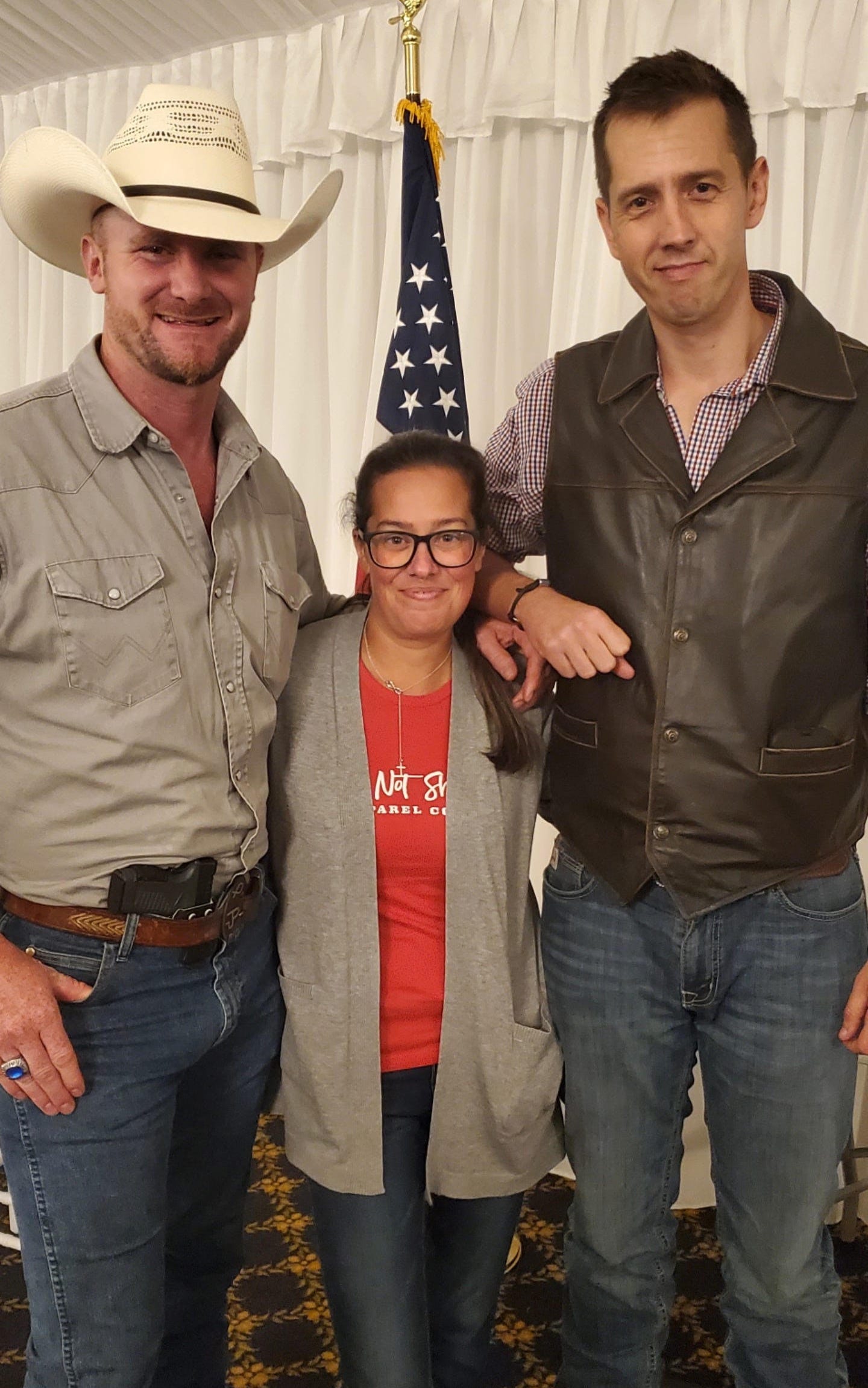
I first met Seth Keshel in 2021, when the country was still deep inside the aftershocks of 2020 and the institutional panic that followed anyone willing to challenge official narratives surrounding election integrity.
At the time, most people knew Seth as “the map guy.” The former Army Military Intelligence officer who was publishing county-by-county analyses, voter registration breakdowns, and predictive models that many dismissed outright because they did not fit comfortably inside approved political discourse.
But even then, what stood out to me was not simply the data.
It was the discipline.
A lot of people entered the independent research space during that period. Most did not survive it intact. Some burned themselves out emotionally. Some became consumed by audience capture. Others lost focus, credibility, or perspective altogether under the constant pressure of public attacks, platform suppression, and institutional hostility.
Seth did the opposite.
He evolved.
And that evolution is exactly what makes his new book, The American War On Election Corruption, important beyond the politics itself.
The book is not just an argument about election systems. It is the product of five years of refinement under pressure.
What you see in these pages is someone who has spent years pressure-testing methodologies in public, taking incoming fire from every direction, continuing to sharpen his work, and somehow emerging more stable rather than less.
That is rarer than people think.
The independent media ecosystem is built to reward emotional escalation. Algorithms reward outrage. Audiences reward certainty. Entire careers are built on becoming a caricature of yourself. The gravitational pull toward instability is enormous.
Seth resisted it.
That may actually be the most impressive thing about him.
His book traces what he argues are decades of incremental changes to American election systems, connecting historical political corruption to modern voting infrastructure, registration systems, ballot expansion, and procedural vulnerabilities.
Whether people agree with every conclusion or not, what cannot honestly be denied is the sheer amount of sustained work behind it.
This is not a Twitter thread turned into a paperback.
This is years of accumulated analysis condensed into a framework.
The foreword by Newt Gingrich signals something larger as well. Seth is no longer operating solely as an outsider analyst shouting into the void. He has become institutional enough to be impossible to ignore while still remaining fundamentally independent in tone and methodology.
That balancing act is extraordinarily difficult.
I have watched Seth navigate all of this in real time since 2021. The professional growth is obvious. But honestly, the personal growth may be even more significant.
There is a steadiness to him now that only comes from surviving prolonged conflict without allowing it to hollow you out internally.
People underestimate the toll these years have taken on researchers, writers, analysts, and independent journalists. Entire lives were rearranged. Friendships and marriages collapsed. Careers detonated. Reputations were systematically targeted. And through all of it, Seth kept working.
Not hysterically or erratically.
Consistently.
And that consistency matters.
In an era dominated by instant reactions and disposable outrage cycles, there is something profoundly different about people who commit themselves to long-term frameworks instead of short-term emotional validation. Seth has become one of those people.
And frankly, that transformation mirrors something happening more broadly across independent analysis itself.
Many of the people dismissed as fringe voices in 2021 are now being treated as serious analysts because reality forced broader audiences to revisit assumptions they once considered untouchable. Some handled that transition badly. Vindication can be just as destabilizing as rejection.
Seth handled it well.
He became more measured, more disciplined, and more methodical over time rather than more performative.
That is visible throughout this book.
You can feel the difference between someone chasing virality and someone building a durable body of work.
And whether people realize it or not, durability is becoming one of the most valuable commodities in modern information warfare.
Lots of people can generate noise.
Very few can withstand years of sustained scrutiny, continue refining their methodology, maintain meaningful professional alliances, evolve personally, and still produce coherent long-form analysis at the end of it.
Seth did.
That is why this book matters.
Ada Nestor is the author of “My Reflections From The Edge,” a fast-rising newsletter bringing needed perspective to the often-chaotic events we read in headlines every day.
Great writeup! Though it's more about Seth's bona-fide as an election analyst and prognosticator with a few words about the quality of the content than a review of the book.
I was struck by the content of her review in the area of the field of election analysis. She had some great observations!
I want to add, your own comments about Ada says a lot about the amazing strength and determination of her, and having someone like her on your team is a blessing.