


Last summer, I was contacted by representatives of the Colorado Conservation Alliance and hired to perform an exhaustive study into Colorado’s 2020 election. Colorado was not a 2020 battleground state, nor do my studies into each state’s 2020 election suggest President Trump should have carried the state; however, its margin was suspiciously high in favor of Biden, at +13.5%:
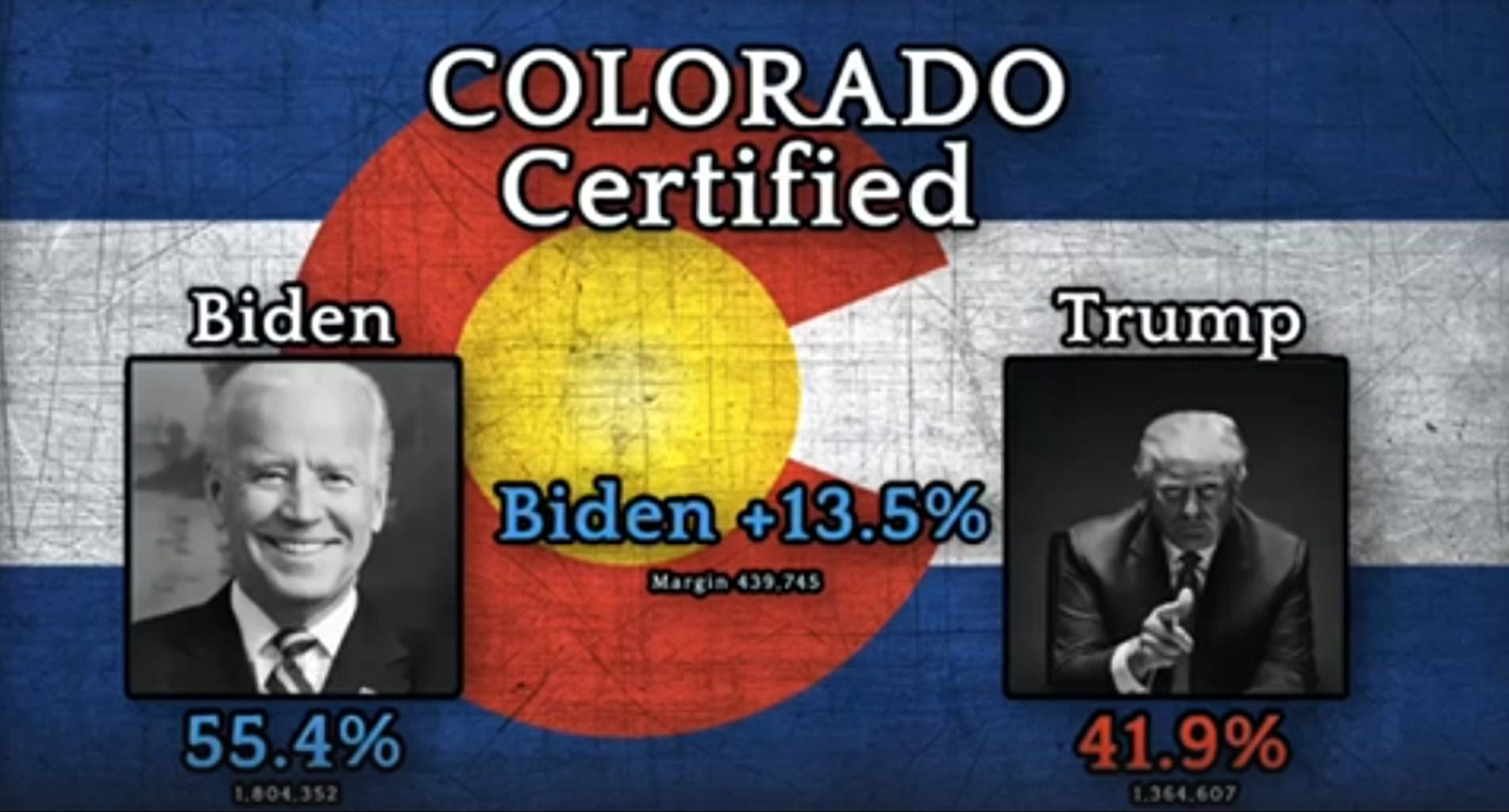
Biden’s margin was the largest for any Democrat presidential nominee since Lyndon Johnson in 1964’s national landslide and came despite Trump posting the highest statewide net vote gain for a Republican since 2004. Trump had only lost Colorado by 4.9% in 2016, despite adding barely any votes over Mitt Romney’s 2012 total. When revised to account for voter registration by party, historic benchmarks, and county-by-county trend (64 counties), I found that Biden would have likely won Colorado by just 5.9% in an election held under pre-2020 standards - slightly to the left of 2016 and in keeping with the voter registration indicator moving left from four years earlier :
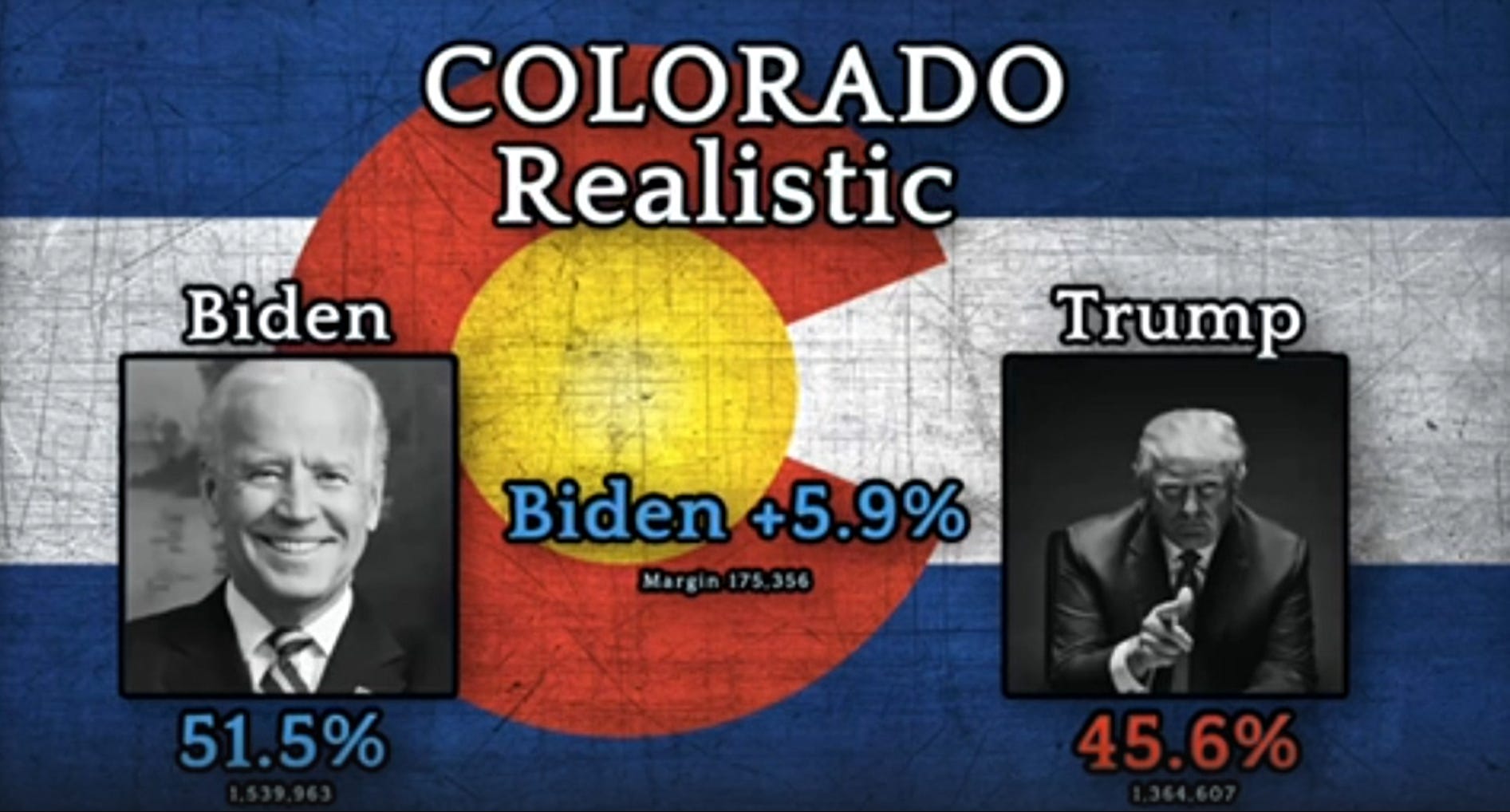
That’s a difference of 7.6% at the top of the ticket between the certified margin and a more realistic margin not marred by mail-in ballot fortification made widespread by the 2020 election environment and largely retained by blue states in the years following. The massive blowout margin in favor of Biden had collateral damage on other ballot items, particularly Proposition 114, “Reintroduction and Management of Gray Wolves.” The vast majority of Colorado’s area is made up of countryside and wilderness, yet the whims of urban Denver insisted on pushing a proposition to reintroduce gray wolves, and the accompanying threats to the ranching and rural communities. It passed by a margin of just 1.8%, or 56,986 ballots, underneath Biden’s bloated landslide win.
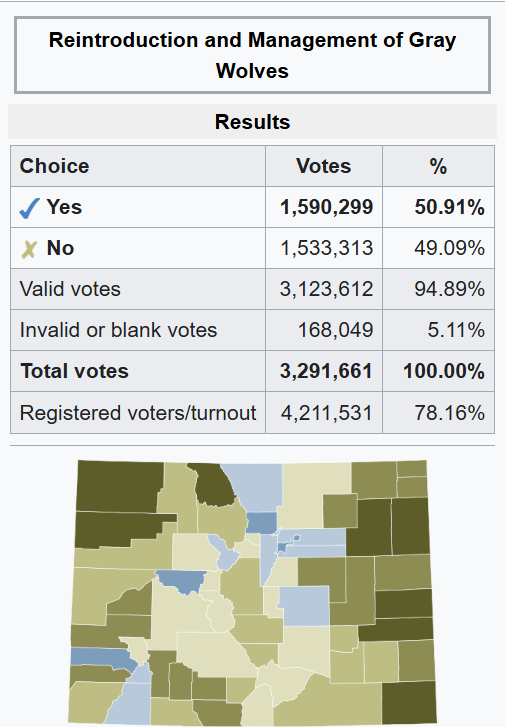
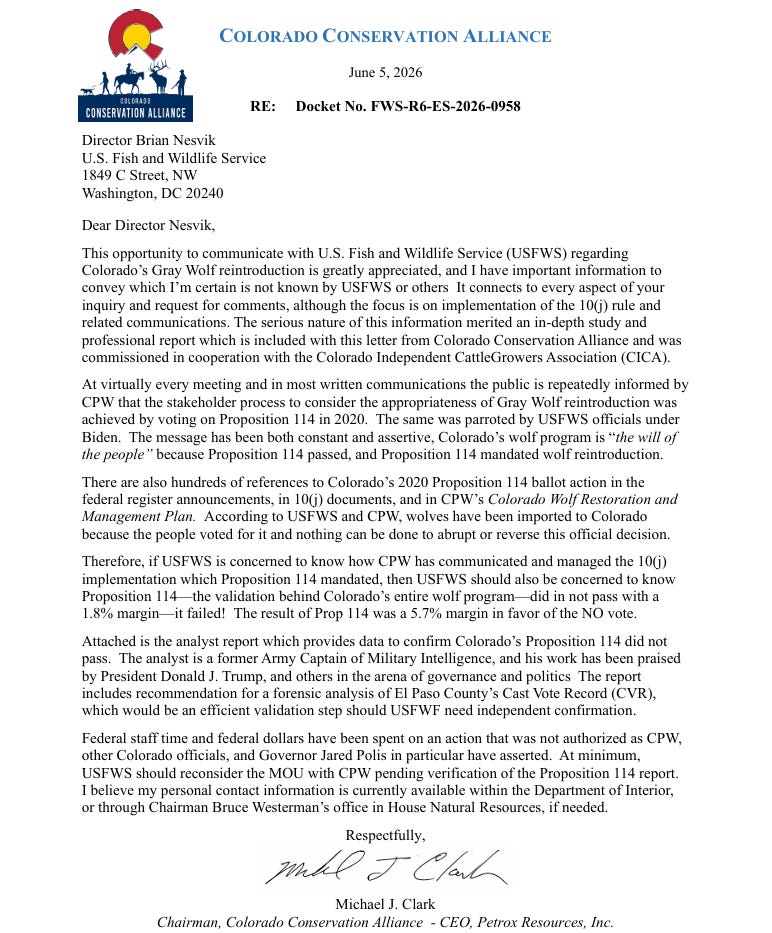
Deconstructing Biden’s 13.5% win thereby shifts the race in Proposition 114 (seen above) to a 5.7% victory for No. Colorado Conservation Alliance Chairman Michael Clark introduces my study to the U.S. Fish and Wildlife Service in the letter shown below:
Paid subscribers to this newsletter can access the attached PDF file encompassing my full findings for Colorado’s 2020 election, both at the statewide level and in-depth into seven counties. It is my hope that this study opens eyes where needed and brings greater clarity to the numerous issues associated with reckless election administration.
File attached below: