


Author’s Note: For a summary of why voter registration by party is so important, and to understand the importance of these states and why each were selected for this recurring study, please see the March 2025 summary.
Last month’s report can be found here.
Join me on LIVE this evening at 3 PM EST/12 PM PST (for paid subscribers).
Your support of this newsletter is critical and worth your time and money. Please support my efforts by becoming a paying member of Captain K’s Corner:
FLORIDA
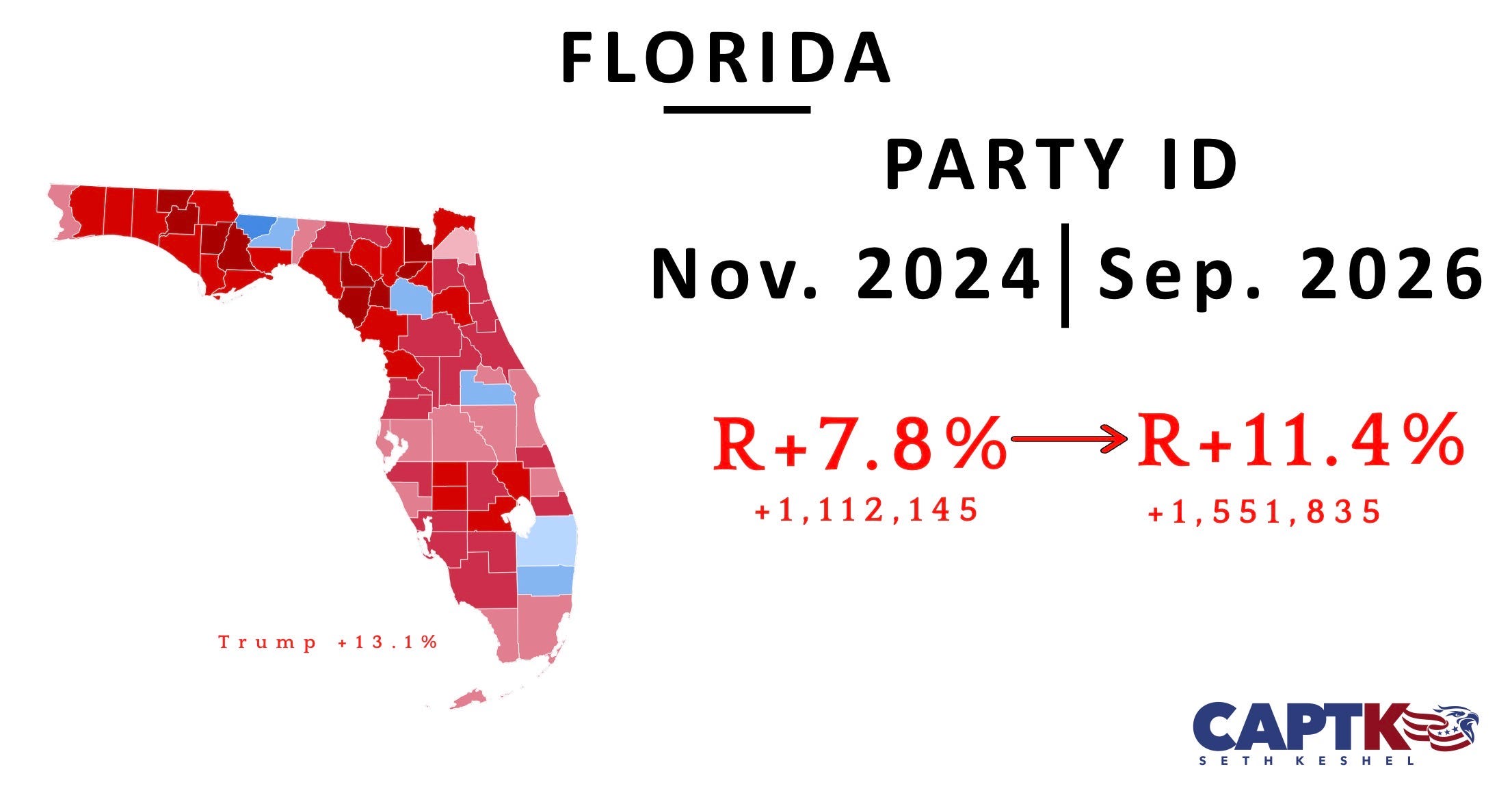
Net Shift Since August: R+9,973
Old Faithful comes through again, with a net pickup of nearly another 10,000 more Republicans on the rolls despite a Democrat gain larger than July’s. This is despite Florida’s primaries having taken place on August 18. Notice how Republicans went slightly backward in Iowa, Arizona, and North Carolina (and back further in Pennsylvania) for primaries, but not in Florida. That’s a big sign the Democrats have thrown in the towel on the Sunshine State, which will remain red this fall in all statewide races.
Florida’s drift is predictive for Pennsylvania and Michigan since 1952, portending good things for future GOP campaigns in both of those battlegrounds in the next presidential election. Florida appears to be emerging as the premier GOP superstate, passing Texas (although not in order of importance by electoral votes and House seats).
Races to watch: FL-14 (leaner), FL-22 (leaner), FL-25 (decisive)
IOWA
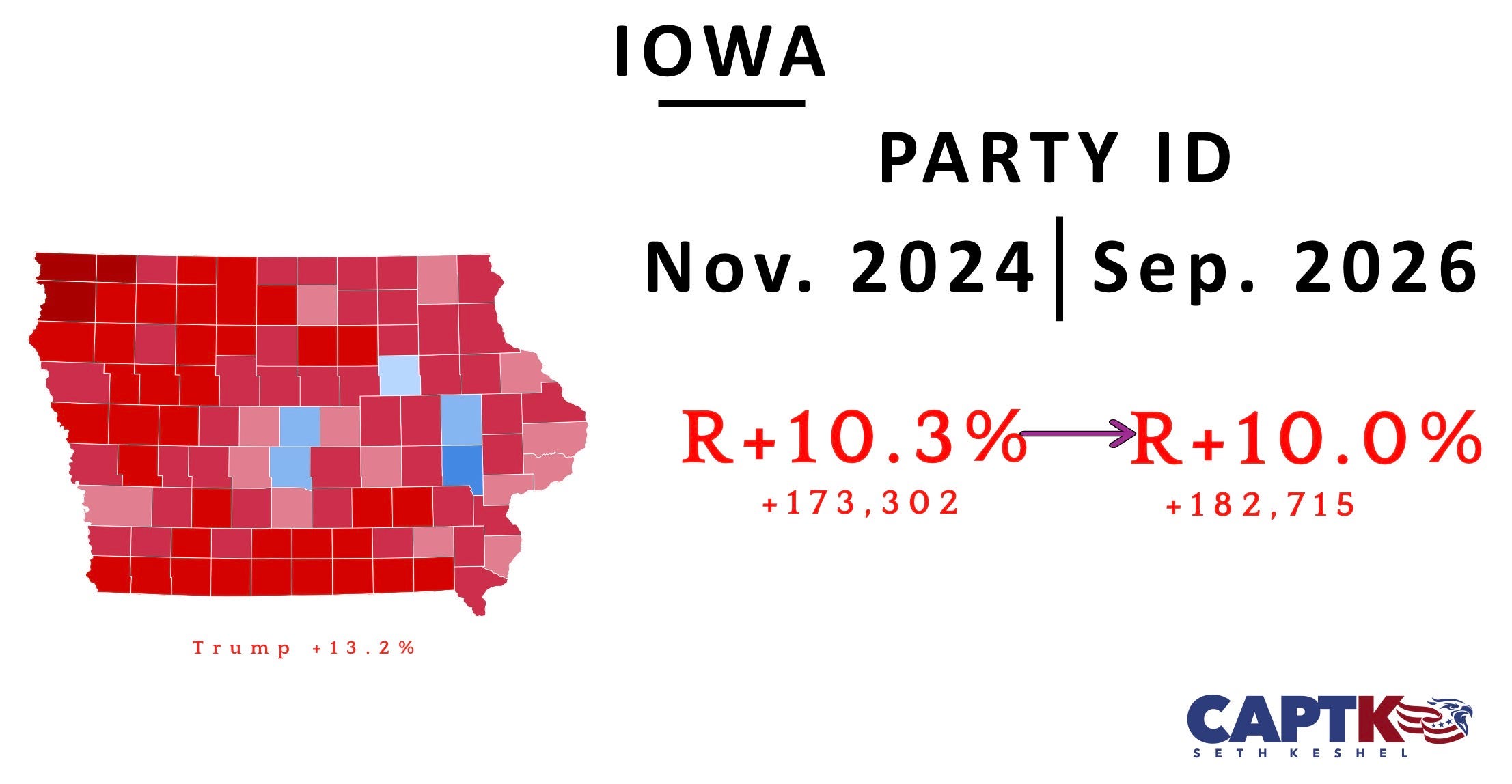
Net Shift Since August: D+614
A similar churn as the one in July, with another minor Democrat gain potentially attributable to roll maintenance more than anything else. Democrats pick up a net of 614.
Iowa is worth tracking because it has a valid correlation to the shifts in Wisconsin and Minnesota, which cannot be precisely tracked by party registration. Furthermore, Iowa has two extremely competitive House seats that must be watched closely, and now a gubernatorial contest looking tight.
Races to watch: IA-1 (decisive), IA-3 (decisive), U.S. Senate, Governor
PENNSYLVANIA
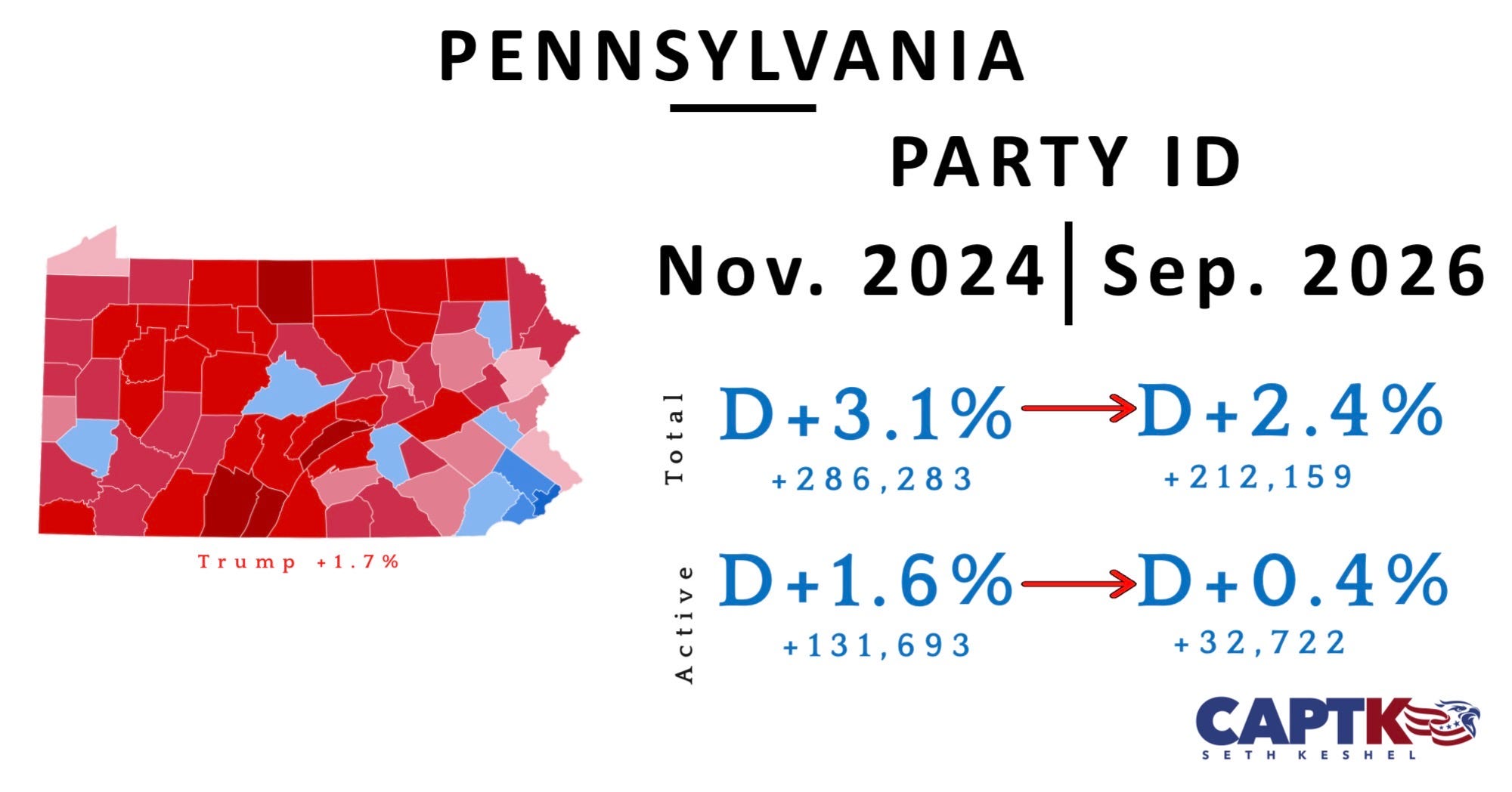
Net Shift Since August: D+5,729 Total, D+6,911 Active
It’s Democrats gaining again post-July roll purge, winning every week. It is very clear to me, given their modest gains in North Carolina (a state of similar size), that a dedicated and well-funded voter registration effort is underway to reverse the now-magnified Republican gains having taken place in the Keystone State for the past 16 years. Democrats led by well over a million registrations in the Obama days.
Democrat gains are driven by urban areas such as Philadelphia and its collar counties, as well as Allegheny County (Pittsburgh). I measured the change since August in three vital blue-collar counties Trump won, and found the following changes: Monroe (D+85 overall, D+113 active); Northampton (D+227 overall; D+235 active); Erie (D+2 overall; R+17 active). With Republicans actually gaining in Erie County and treading water in the other two, I am not sensing a legitimate reversion to Democrat voting patterns developing in the long run for these counties, and therefore the state itself.
Races to watch: PA-1 (leaner), PA-7 (decisive), PA-8 (decisive), PA-10 (decisive)
NORTH CAROLINA
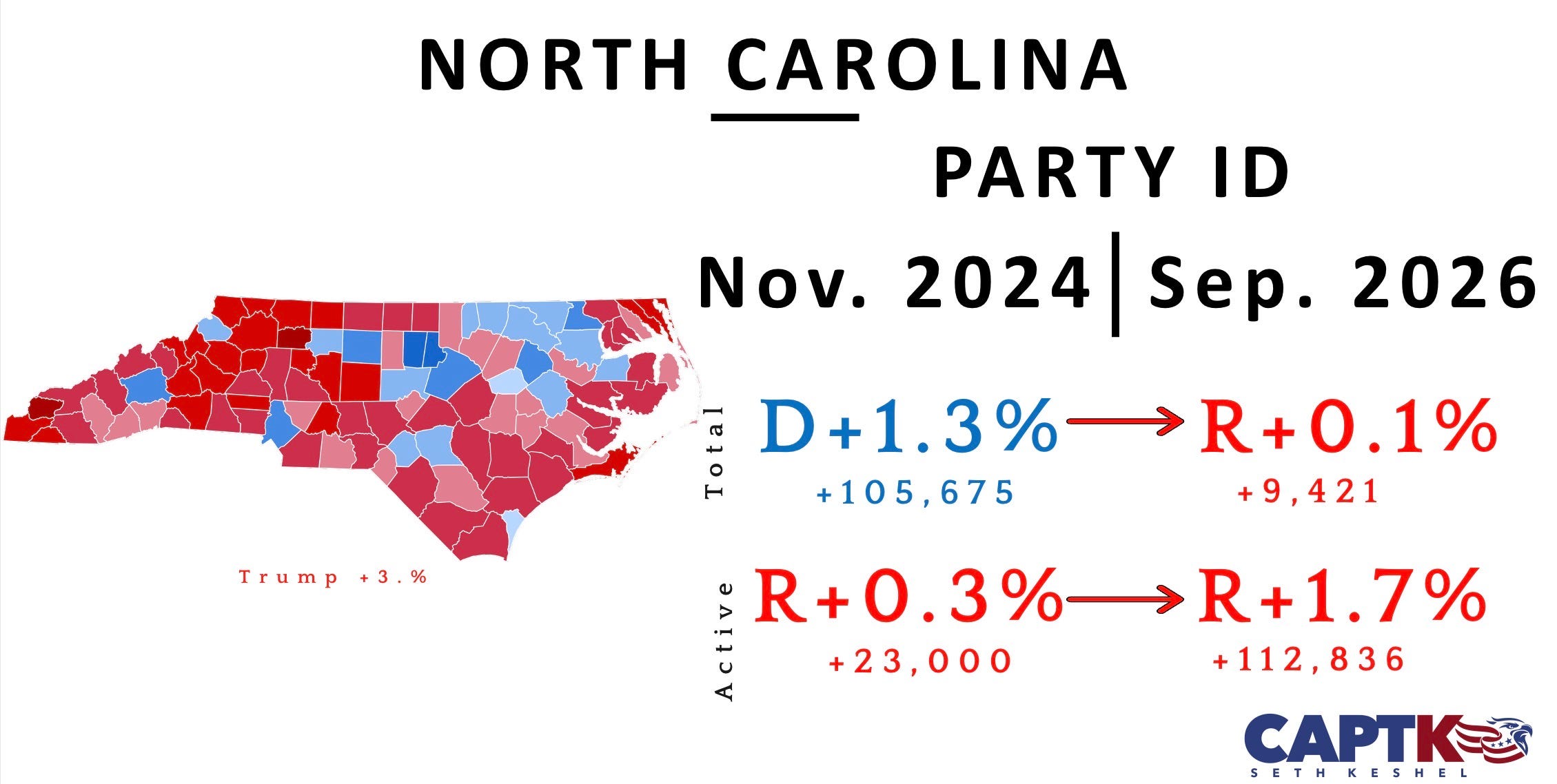
Net Shift Since August: D+902 Total, D+1,058 Active
The Democrat gains are much more modest (D+902 total/1,058 active) than in Pennsylvania (D+5,729 total/D+6,911 active), which makes me think Democrats have two vastly different operations going on in those states; regardless, Democrats are making gains through the Charlotte and Raleigh-Durham metros as Republicans stagnate.
With former Democrat Governor Roy Cooper running for U.S. Senate, Republicans need all the help they can get. I consider the GOP-held seat in North Carolina the most likely to flip to Democrats in 2026, with Michael Whatley the Republican nominee.
Races to watch: NC-1 (leaner), U.S. Senate
NEW HAMPSHIRE
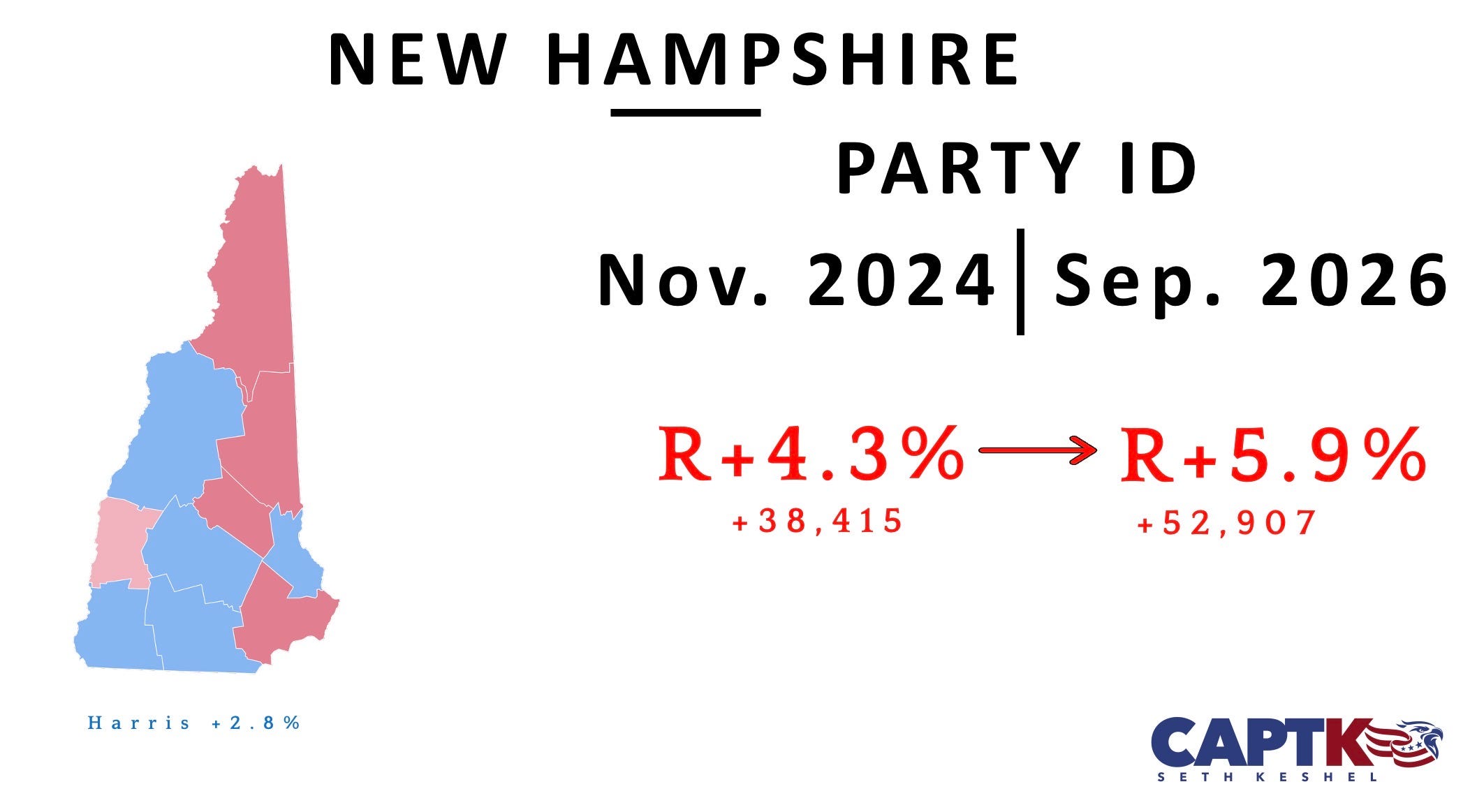
Net Shift Since August: No update
Republicans are in the hunt for the open U.S. Senate seat, and have a few good polls out this month. No update on voter rolls, with the next one likely out in November. I would expect modest Democrat gains given the nature of midterm cycles.
The Granite State remains the most likely Republican flip for the 2028 presidential election.
Races to watch: NH-1 (leaner), U.S. Senate
ARIZONA
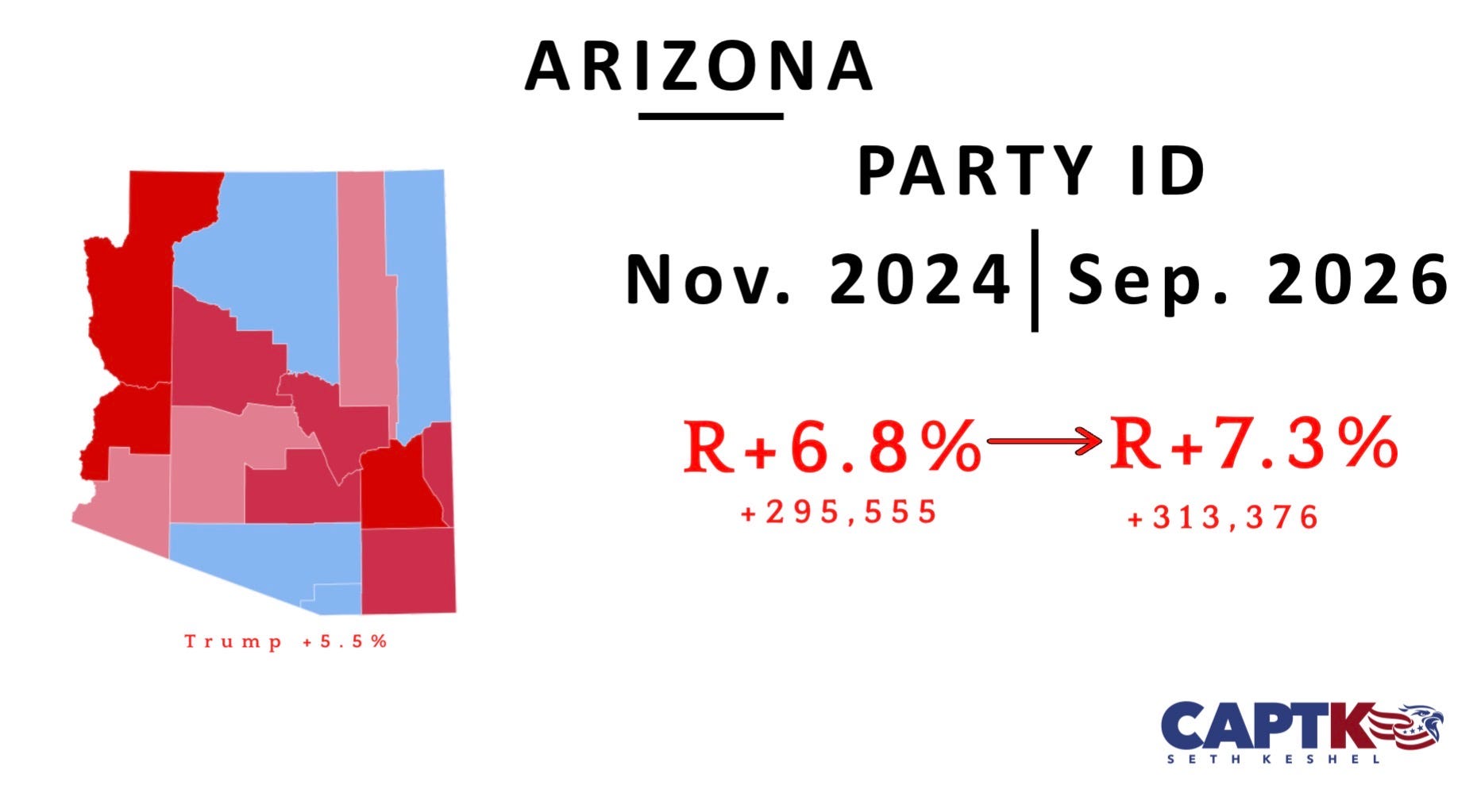
Net Shift Since August: No update
No update from the Secretary of State; another is likely mid-October with Democrats having made modest gains driven by Maricopa County.
Arizona’s statewide offices are up for grabs this year, and the Democrats have a real shot at flipping the legislature for the first time since the 1960s, so the battle for voter registration looms large. I have a strong suspicion that the GOP is having membership issues with the Mormon church, also evident in Utah - and not good for the 2026 midterm outlook. I remain optimistic long-term for Arizona, but the GOP needs to get serious on its urban strategy.
Races to watch: AZ-1 (decisive), AZ-6 (decisive), all statewide offices
NEVADA
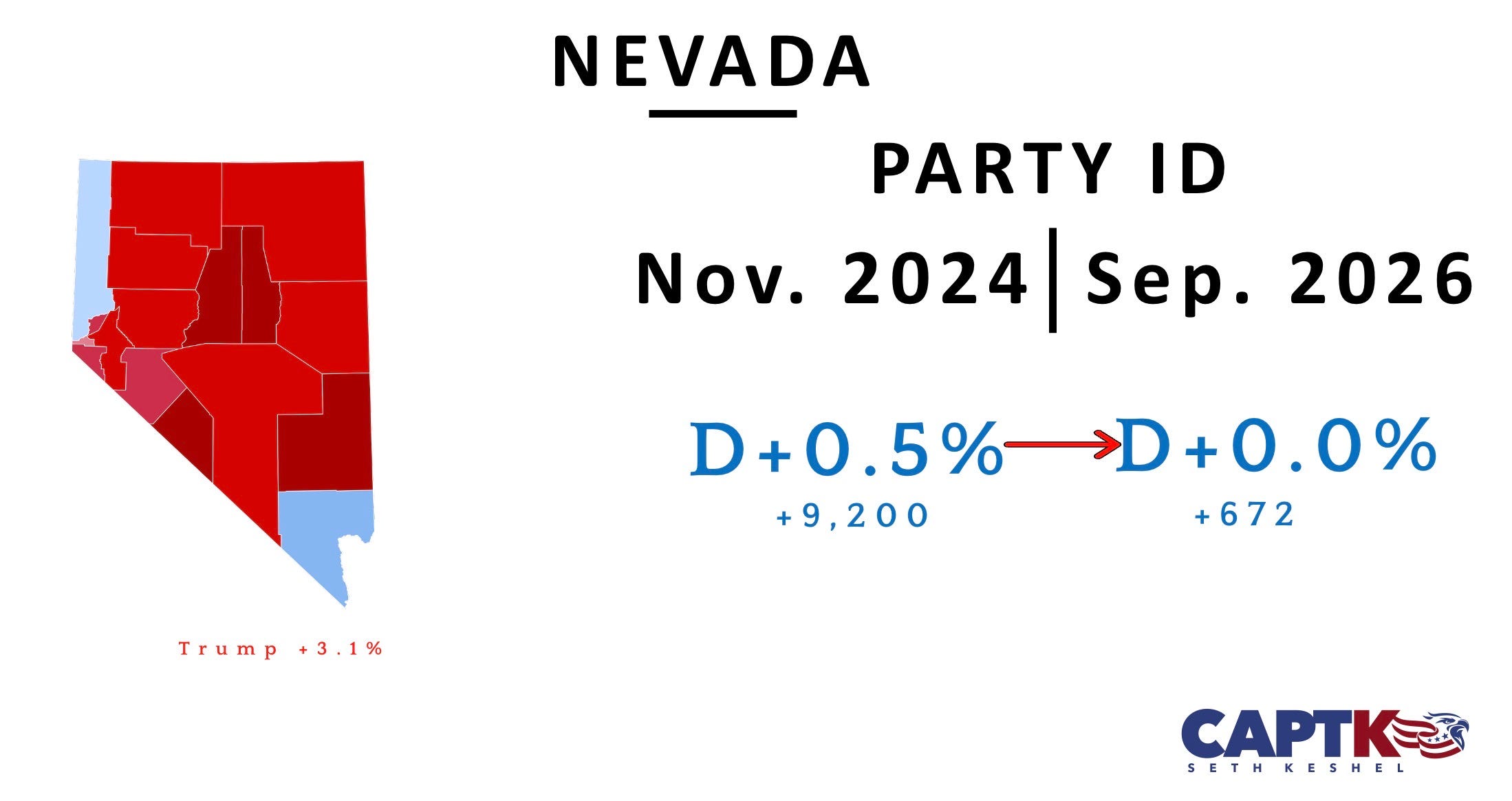
Net Shift Since August: R+1,165
This marks the first net win for the GOP in several months, but it is a product of voter registration maintenance, which gutted Democrats primarily in Clark County. Republicans lost over 13,000 registrations, while Democrats obviously lost more than 14,000. The registration index, which has flipped between parties for the past year multiple times, once again hovers right around dead even.
Races to watch: NV-3 (leaner), all statewide offices
Seth Keshel, MBA, a former Army Captain of Military Intelligence and Afghanistan veteran, is the author of The American War on Election Corruption. His analytical method of election forecasting and analytics is known worldwide, and he has been commended by President Donald J. Trump for his work in the field.
Captain K’s Corner is a Polymarket partner newsletter.
I subscribed today. Outside of Maine, what might be the best prediction market bet(s)? Many thanks.
Please don't just worry, organize and get out the GOP votes for your state. We need to be more involved. I'm from Colorado and we are turning into California, but we finally have a duo for Governor and Lt Governor who are Veterans, critical thinking, conservatives that we are pushing for their win. Cross your fingers for us.