


Author’s Note: Other 2026 forecasts can be found in the Central File. This forecast/prediction contains proprietary mapping data beyond the paywall information prepared by the author for analytical purposes.
A special one-year offer to become a paid subscriber is available for 6 more days:
I. The Race
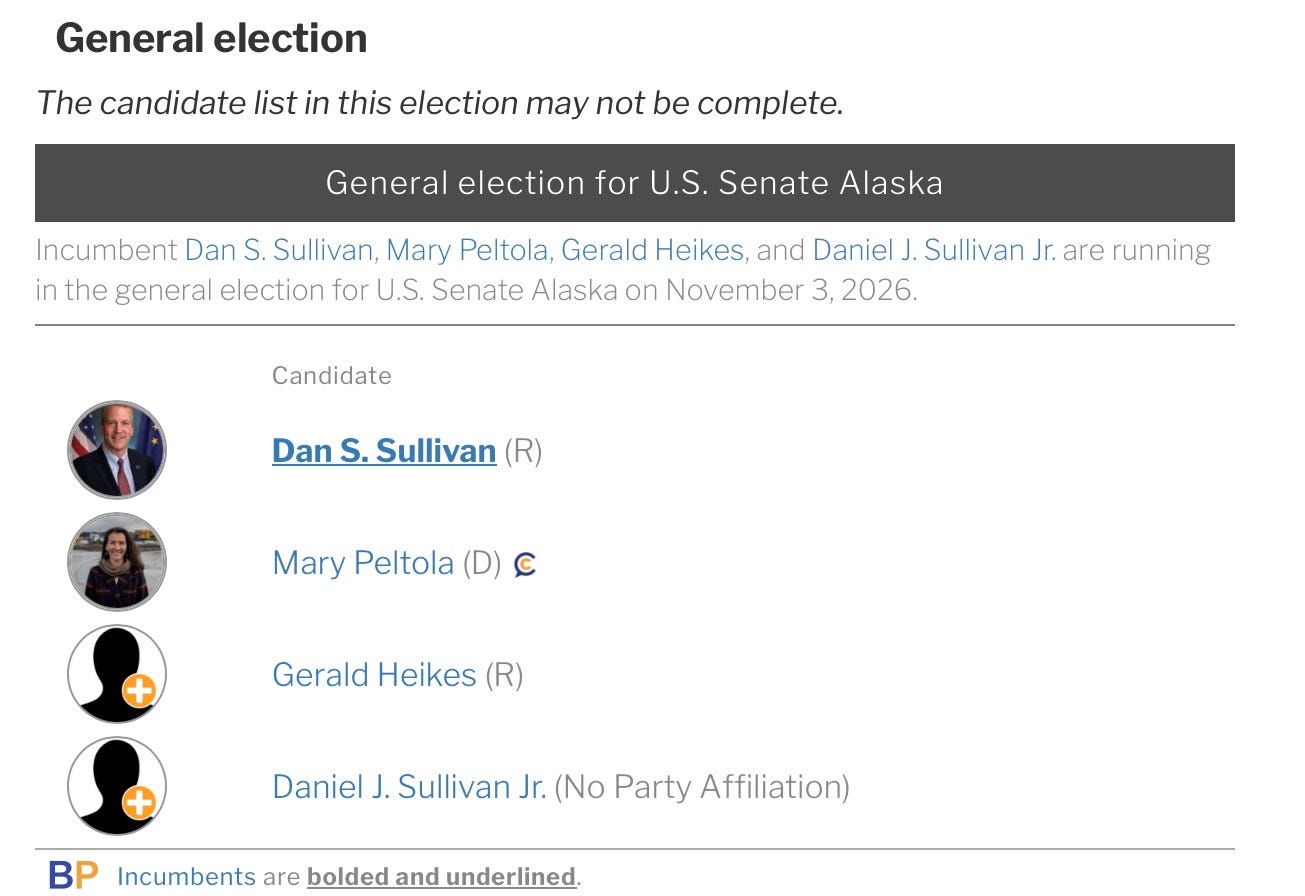
Dan Sullivan (Republican) is running for his third term representing Alaska in the United States Senate. He last won reelection in 2020, running ahead of President Trump on the same ticket - albeit against an “independent” candidate rather than a card-carrying Democrat.
Mary Peltola (Democrat) replaced Republican U.S. House mainstay Don Young in Washington following a 2022 special election, and won a full term in November 2022. She is perhaps the Democrats’ only talented candidate in Alaska, and she opted to pursue the Senate instead of the AK-AL House seat she lost to Nick Begich in 2024 - essentially forfeiting that seat to the GOP this year.
2026 Ten-Point Forecast: Alaska At-Large (U.S. House - Leaner)

Author’s Note: Today’s release unveils the first of many U.S. House and Senate forecasts to come now that we have reached election season. For free subscribers, the open portion of this release will help you grasp the depth of my assessments and how distinguished they are from slop polling that is in great abundance these days. All detailed election forecasts will be reserved for paid subscribers.
Gerald Heikes, a no-name Republican, is also on the ticket and will factor in the First Choice calculation of the Ranked Choice system prior to redistribution of votes, and will probably be the first candidate voted off the island.
Daniel J. Sullivan, Jr., is the key factor in this race and was inserted by Alaska Democrats to spoil Senator Sullivan’s reelection chances. Significant judicial corruption allowed him to stay on the ballot against the wishes of the Division of Elections, which determined the imposter Sullivan’s motive for joining the Senate race was to deceive voters (obvious to most with a functioning brain).
Why Alaska Can’t Have Nice Things

Some people can’t sit back and suffer under ordinary conditions. The grind of monotony to these people is another form of torture, and until this is understood, it can lead to some undesirable outcomes - like self-sabotage. Those are the most extreme cases. In other cases, sitting at an airport for 9 hours waiting to see if the weather will clear up enough to take your weekend trip is a no-go.
II. State Profile
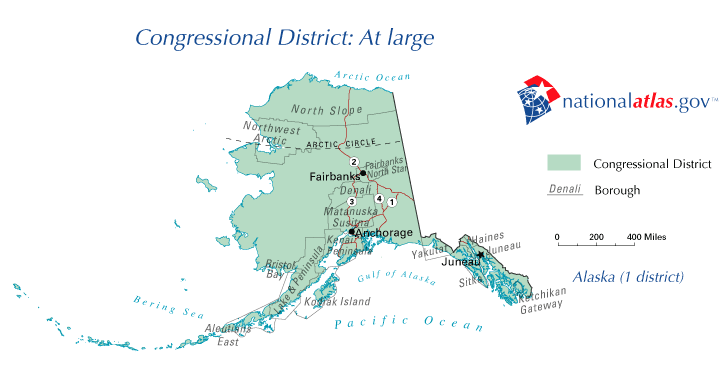
Alaska is a Republican stronghold despite not being tied to the standard set of evangelical preferences common throughout the Sun Belt and “Lower 48” conservative clubs and organizations. It prioritizes individual freedoms and property rights, and has a heavy reliance on the energy industry. These reasons, among others, are why the Last Frontier hasn’t backed a Democrat presidential nominee since 1964, during Lyndon B. Johnson’s national landslide.
Juneau aside, Alaska’s urban areas (primarily Anchorage and Fairbanks) are much more conservative than national counterparts, and under the MAGA realignment, the rural hinterlands have reddened substantially. Peltola is a Native Alaskan who spent time growing up in the rural areas of the state, which gives her a real advantage running in a statewide race. Senator Sullivan will need to maximize turnout in true Republican strongholds, such as the Matanuska-Susitna Borough (Sarah Palin’s home turf), and compete in Anchorage Municipality, to feel good about his chances of winning a third term.
Presidential Margins
2016 Trump +14.7%
2020 Trump +10.1%
2024 Trump +13.1%
Key Statistics
57.5% White, 14.8% Native Alaskan
65.7% Urban, 34.3% Rural
III. Market Assessment
Peltola, propped up by ludicrous polling, is vastly overpriced on Polymarket. The market, while not reflective of the true nature of the race, does correctly view this as a race that will come well inside of normal presidential margins.
IV. History
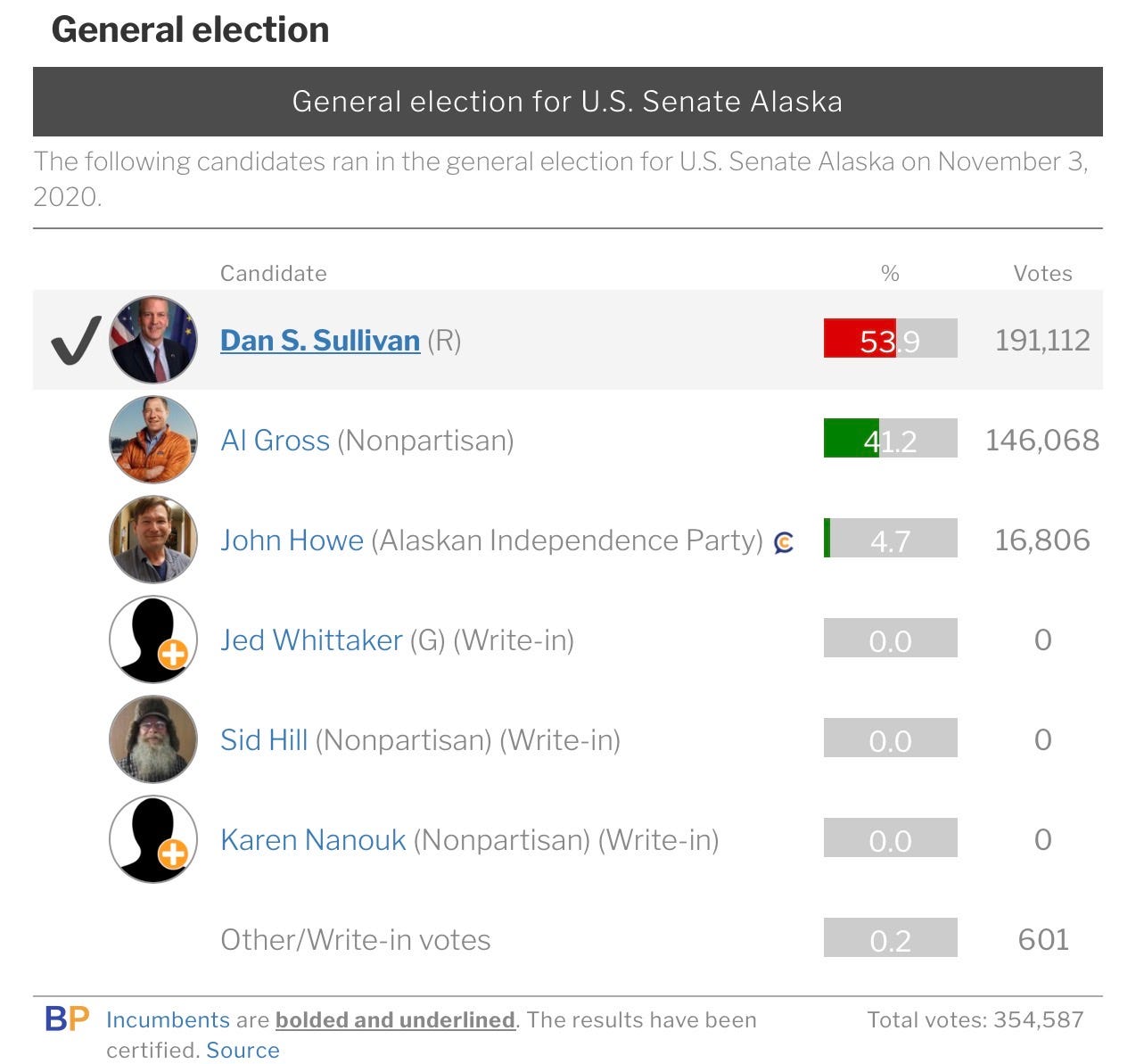
Sullivan was reelected without drama in 2020, with a presidential turnout and voter behavior, even though the election was a fiasco with far too much mail-in balloting authorized:
His first race for the seat, in 2014, came with a midterm red wave at his back and resulted in him unseating Mark Begich (Democrat):
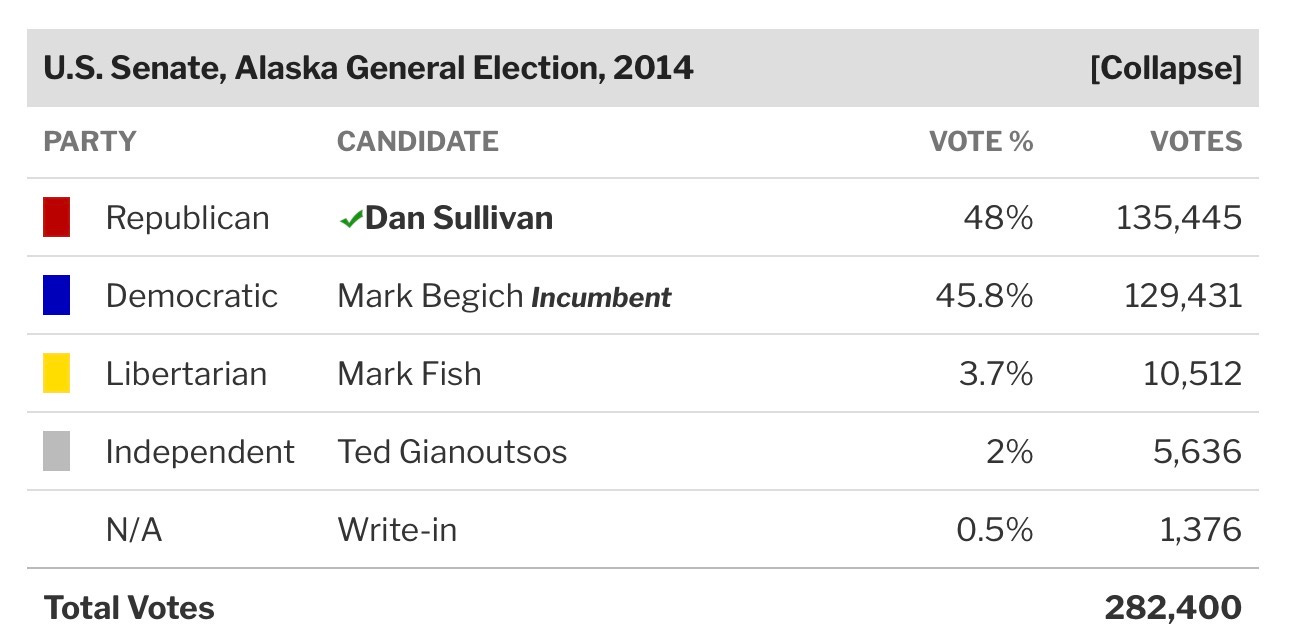
Sullivan was undoubtedly aided by the spoiler candidates taking more than six percent of the vote, allowing him to win with just 48%. Of note, Begich had shocked the political world in 2008 when he rode the Obama wave to knock off the legendary Ted Stevens, who at the time was the longest serving Senator in GOP history (since surpassed by Orrin Hatch and Chuck Grassley).
The other seat, held by swamp creature Lisa Murkowski (whose career Ranked Choice Voting was introduced to save), has been in Murkowski hands since 1981 - held by her father, Frank, starting then and transferring to Lisa by gubernatorial appointment after he (Frank) won his race for governor in 2002. Lisa immediately faced voters and won in a squeaker in 2004, despite a Bush landslide happening on the same ticket:
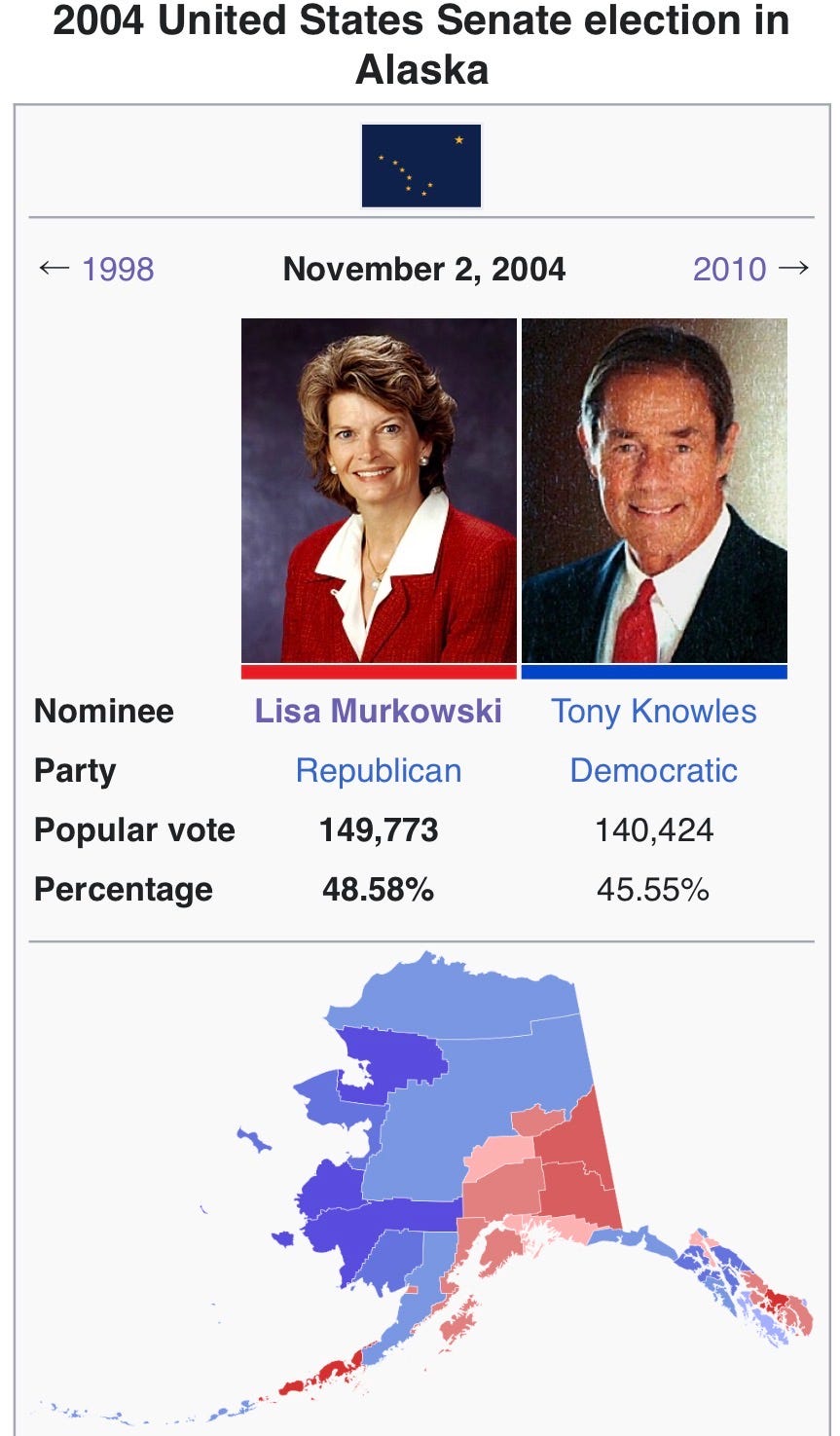
The vastly unpopular Lisa lost the 2010 GOP primary, only to fluke her way into a win in the General Election via a write-in campaign with less than 40% of the total vote. Not to pile onto Murkowski - but both seats have very recent evidence of serious departure from presidential baselines that we don’t see in other states; they must not be ignored in 2026.
V. Analysis of 2026 Primary Results