


Note: Other 2026 forecasts can be found in the Central File. This forecast/prediction contains proprietary mapping data beyond the paywall information prepared by the author for analytical purposes.
I. The Race
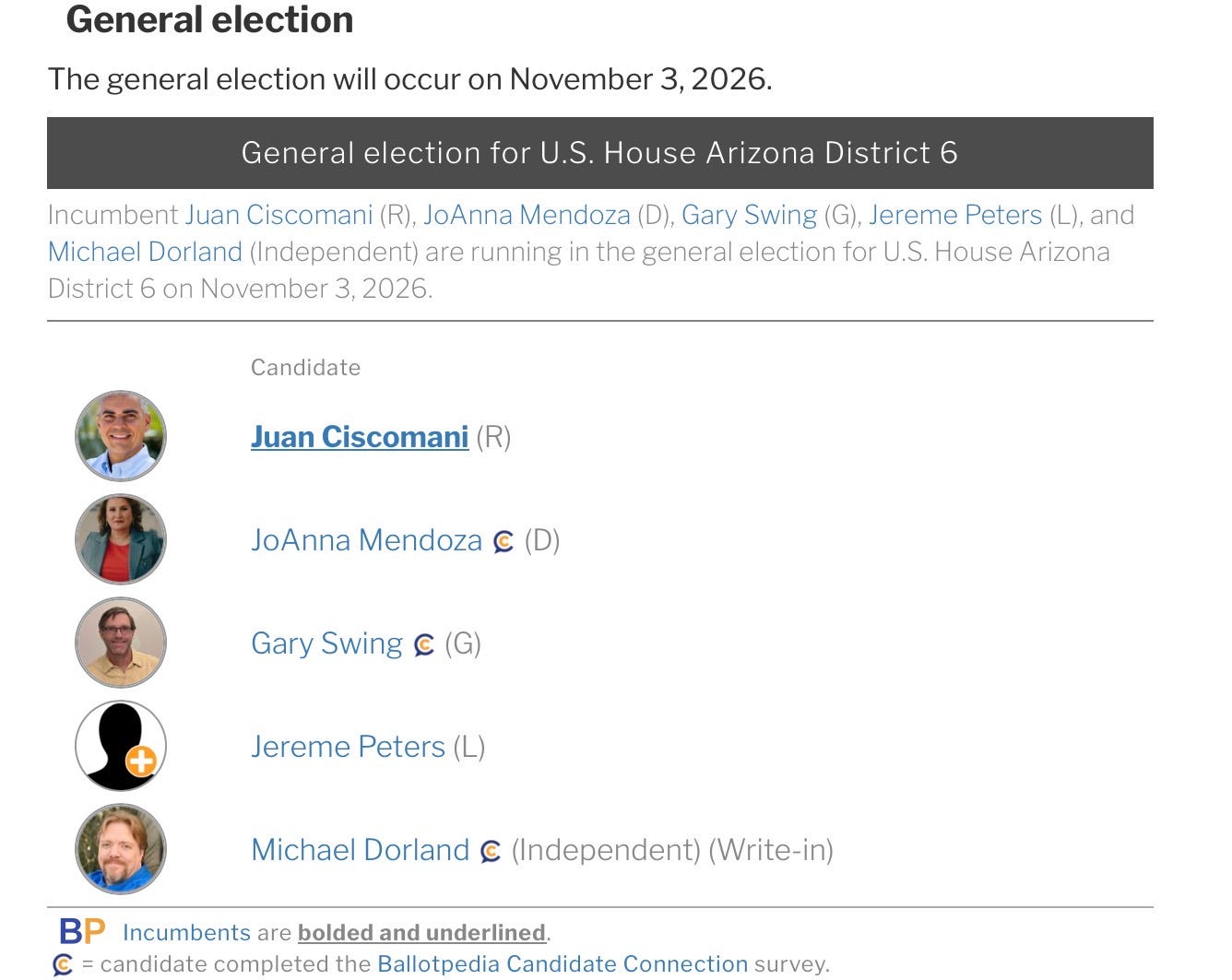
Juan Ciscomani (Republican) seeks his third term representing AZ-6 in the U.S. House. He won the seat in 2022 in the first election held under its current boundaries after having served as an advisor to former Arizona governor Doug Ducey. Ciscomani is the first naturalized immigrant from Mexico to serve in Congress from Arizona.
JoAnna Mendoza (Democrat) is a Marine Corps veteran who found her way into politics after retirement from the military. She has worked extensively as a lobbyist and ran unsuccessfully for the Arizona Senate in 2020.
The ballot also includes potential spoilers for both candidates - especially Green Party candidate Gary Swing (who would exclusively siphon votes from Mendoza).
II. District Geography
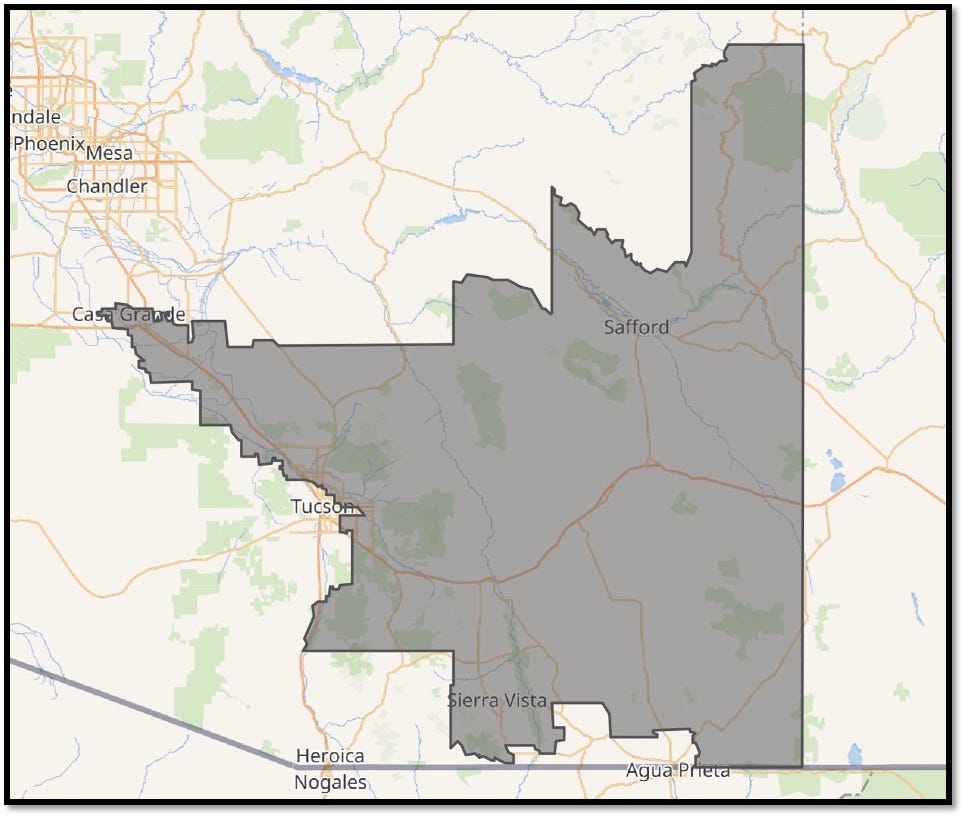
Arizona’s 6th Congressional District (AZ-6) is wedged into the southeast corner of the state and stretches across five counties: all of tiny Greenlee County, and fragments of Cochise, Graham, Pinal, and Pima Counties. The Pima portion includes chunks of northeast Tucson, the sole reason the district is competitive in any way and the portion Mendoza rests her hopes on for unseating Ciscomani.
Mendoza is originally from Eloy in Pinal County, so she will look for extra support in that part of the district while looking to leverage her military service to sandbag Ciscomani’s margins in Cochise County, which is home to Fort Huachuca - the headquarters of the U.S. Army Military Intelligence Corps (where yours truly was twice stationed).
The shift against Trump in northeastern Tucson and its suburbs (which includes my wife’s district, Legislative District 17) dramatically reduced the presidential margins of these boundaries:
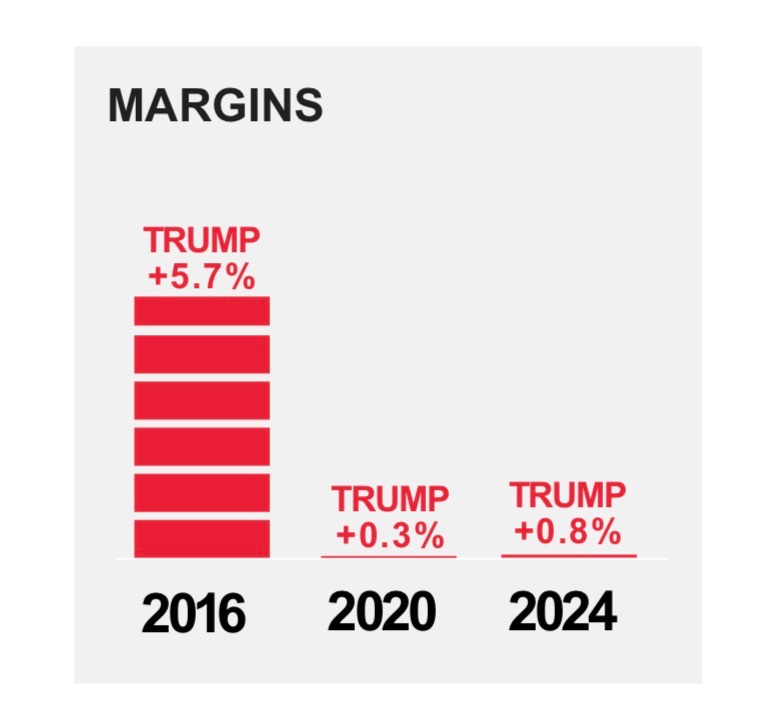
As you can clearly see, Trump went from winning these boundaries by 5.7% in 2016 to carrying them by less than a point in 2020 and 2024, running behind Ciscomani in the latter run. Whereas he has continuously improved with Latino voters, he has backtracked with affluent former Republicans of the Flake/McCain variety. It truly takes a skilled political toolset to succeed in this district, and it would be difficult to draw a more complex and competitive district than AZ-6. The winning candidate must have an excellent overall game that includes rural outreach and urban strategy.
Key Statistics
63.1% White, 24.7% Hispanic
96.8% Urban, 3.2% Rural
III. Market Assessment
Polymarket bettors have their money on the out-party candidate, Mendoza, but have her significantly overvalued against a candidate who has figured out how to thread the needle in the Trump era.
IV. History
The latest redistricting of Arizona drastically altered the composition of the suburban Tucson district. The remainder of Tucson, the urban core and its heavily Hispanic working-class vote in the southern end of the metro, has long been given over to the Grijalva political family, which rules over its subjects with an iron fist.
In 2016, Cochise County and northeastern Pima County made up AZ-2 (AZ-2 is now Eli Crane’s district in northern Arizona). Incumbent Martha McSally won the seat by 14 points, at the same time Trump lost the district by 5. That is one of the biggest red flags possible looking back at the 2018 cycle (Trump massively underperforming the GOP House candidate), and when McSally vacated the seat to run for U.S. Senate, all hell broke loose. Democrats won the seat by 9.5%.
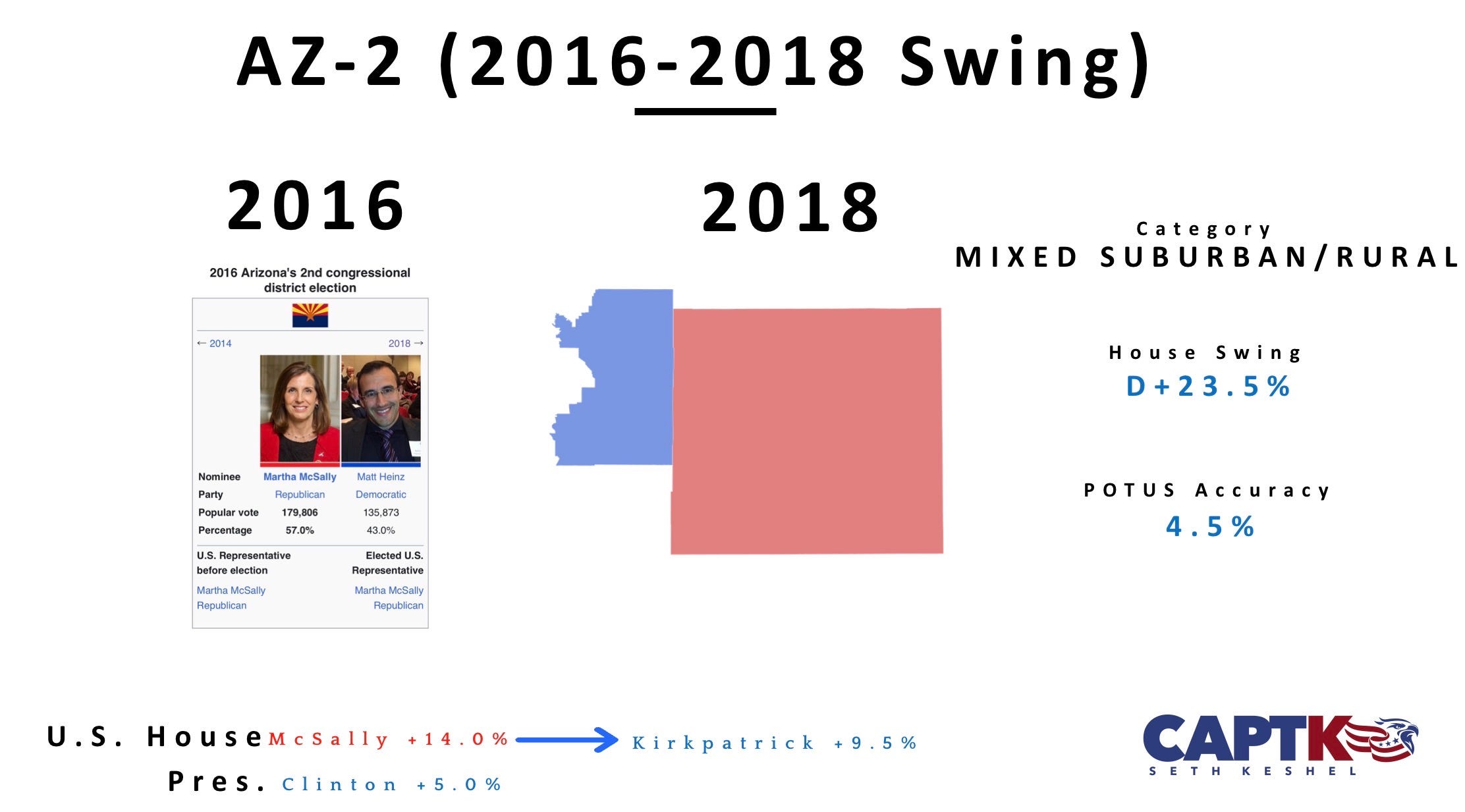
Cochise County, while weaker in margin, wasn’t the problem. It was northeastern Pima County, which is still in Ciscomani’s district today. The middle swung hard to the left and contributed one more to the Democrat count on their way to a strong House majority win. Ann Kirkpatrick, who took the seat, held it by 10.2% against Republican Brandon Martin in 2020’s crooked election.
Arizona redistricted, and with Kirkpatrick retiring, Ciscomani and Kirsten Engel battled for the seat in the 2022 midterms. Despite Arizona elections being a disaster once again, Ciscomani narrowly defeated Engel in what was a surprise to many.
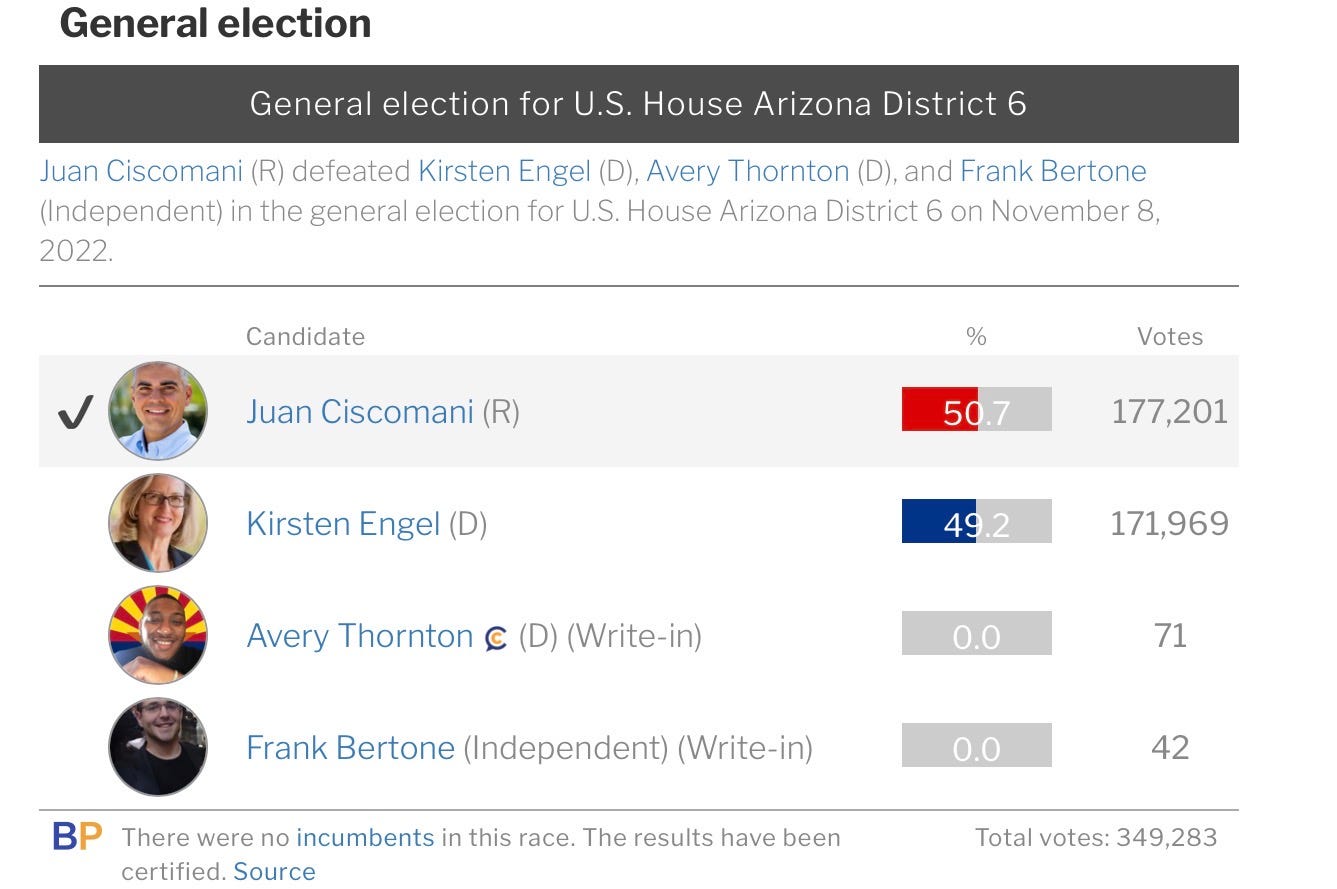
Ciscomani then held the seat in 2024 by a larger margin against the same opponent, with his win being the seat that led media networks to call the House for the GOP:
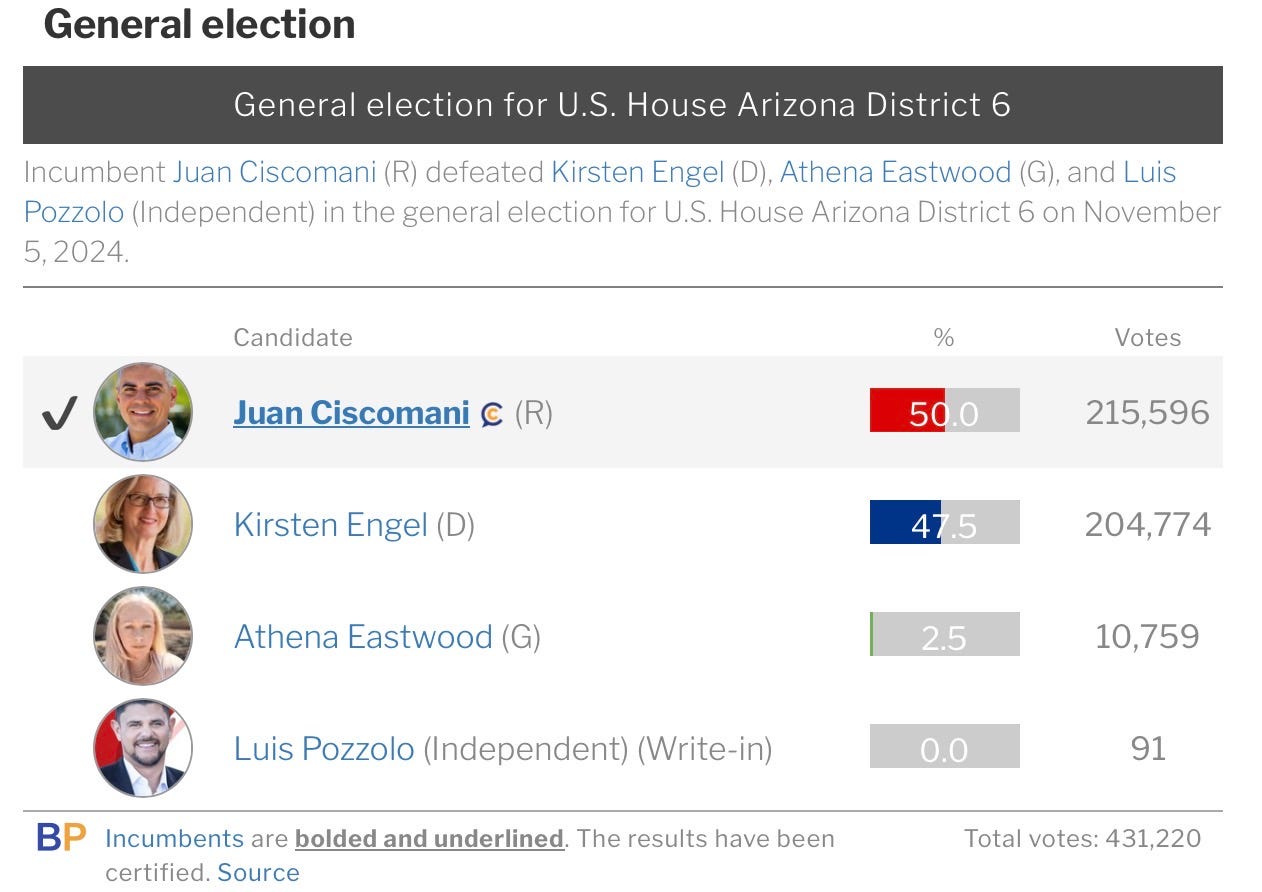
History suggests to us that an elastic portion of the electorate in Pima County can swing hard in a midterm, but also that Ciscomani has found success in a district that has been resistant to the MAGA agenda.
V. Analysis of 2026 Primary Results