


Author’s Note: Other 2026 forecasts can be found in the Central File. This forecast/prediction contains proprietary mapping data beyond the paywall information prepared by the author for analytical purposes.
A special one-year offer to become a paid subscriber is available for 7 more days:
I. The Race
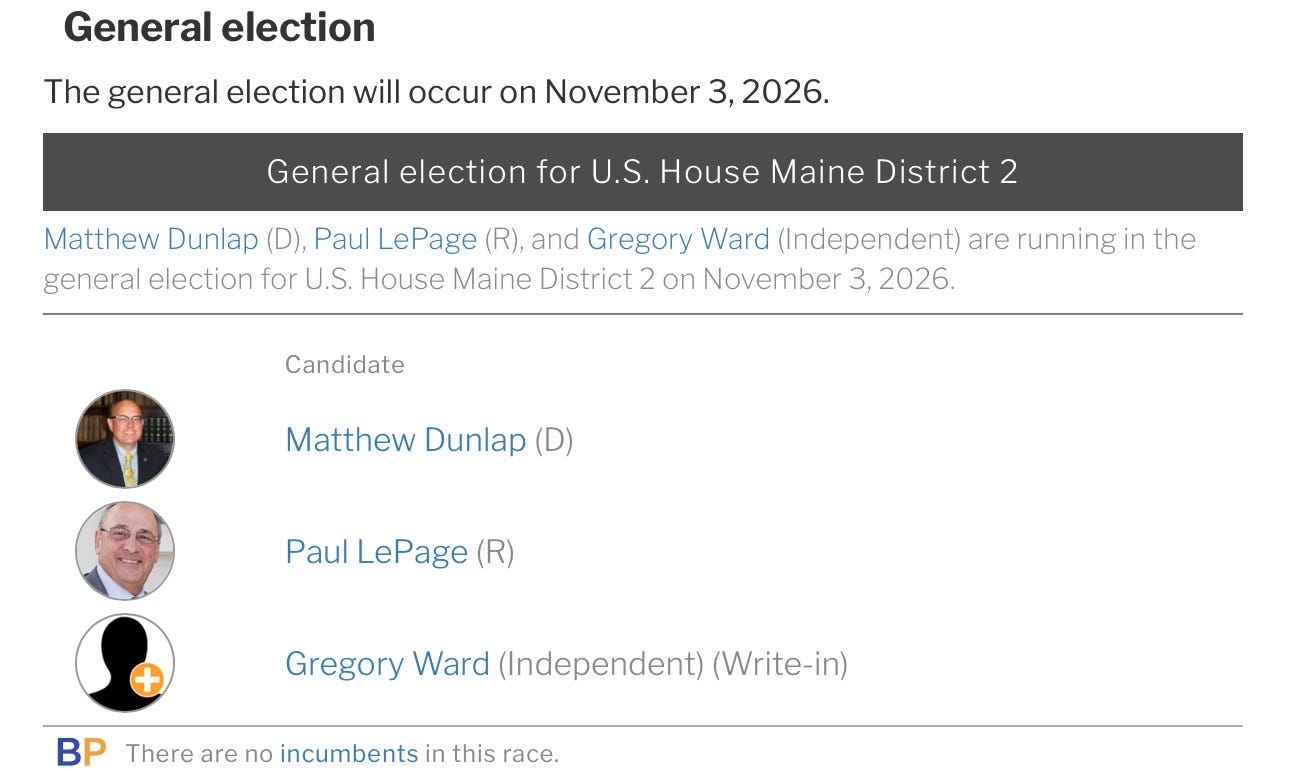
Paul LePage (Republican) is the former governor of Maine and is seeking to become just the second Republican member of Congress from any of the six New England states.
Matthew Dunlap (Democrat) is a career bureaucrat. He currently serves as State Auditor, and has twice been Secretary of State. Before that, he was a member of the Maine House of Representatives.
II. District Geography
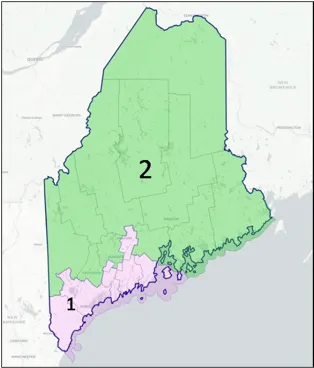
ME-2 makes up the vast majority of Maine’s statewide geography and nestles up against the Canadian border. You can read about ME-2’s political characteristics in my 2024 preview for Maine’s split electoral votes:
Know Your 2024 Electoral College: Maine's Split Electors (2 of 4 Electoral Votes)

MAINE’S 1st CONGRESSIONAL DISTRICT
The districts have changed very little in the state’s history, and Maine has split the electoral votes since 1972. In 2016, Donald Trump became the first Republican candidate to win ME-2 since 1988.
Presidential Margins under Trump
2016 Trump +10.3%
2020 Trump +7.4%
2024 Trump +9.1%
Key Statistics
90.9% White
72.1% Rural, 27.9% Urban
III. Market Assessment
Tapping into LePage’s name recognition and past track record and Trump’s three wins in ME-2, bettors on Polymarket are hunkering down for a LePage victory.
IV. History
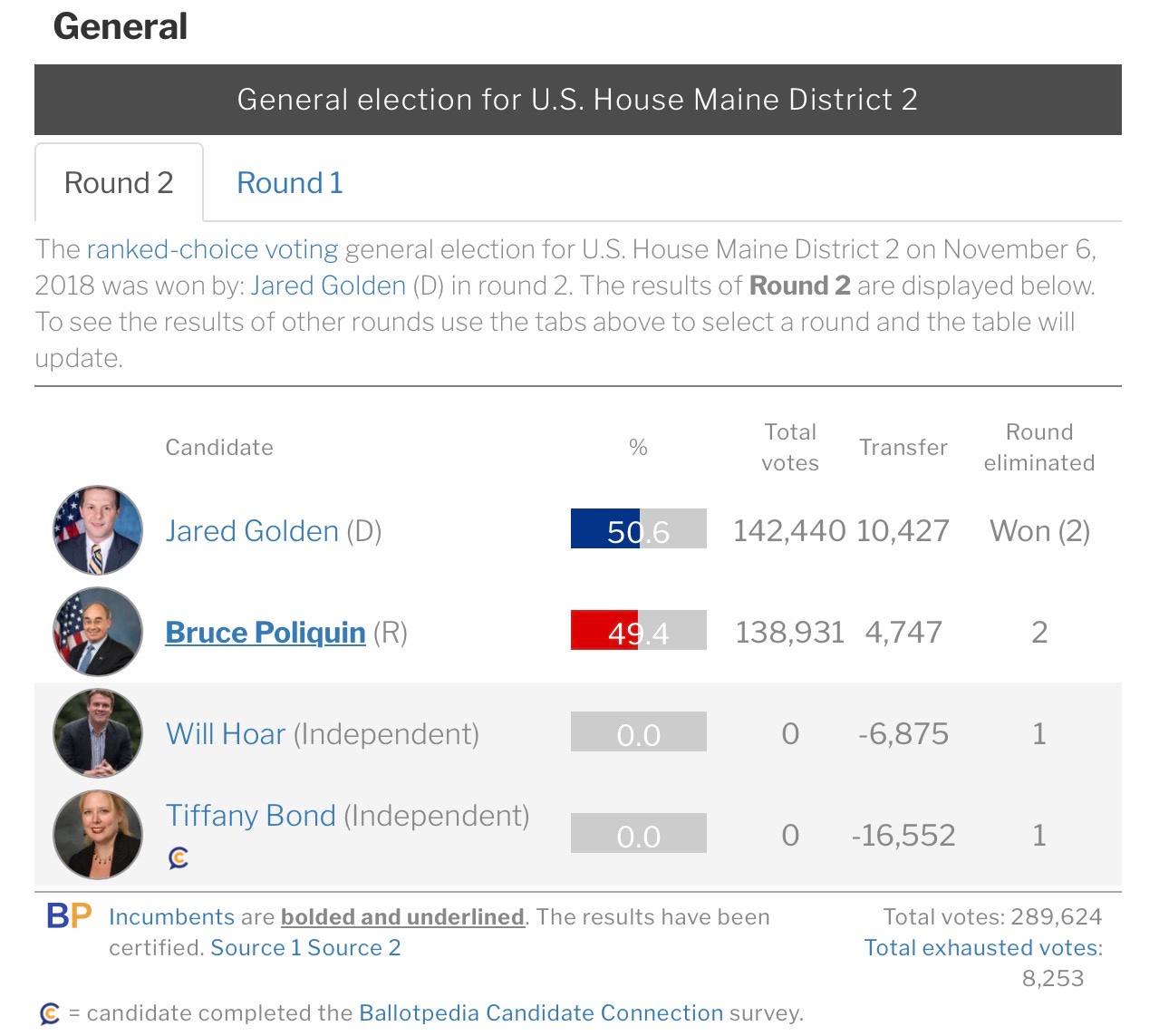
Republican Bruce Poliquin represented ME-2 for two terms, including the first two years of the Trump 45 administration. In the 2018 Democrat wave, he lost his seat (which swung 10.8% left) to Jared Golden, who is retiring from Congress after his current term expires. Interestingly enough, Poliquin beat Golden in the First Choice Round in the very first run of Ranked Choice Voting in Maine, but lost after votes were redistributed:
Golden has successfully defended the seat three times, by +6.2% in 2020, 6.1% in 2022 (over Poliquin again), and a razor-thin 0.6% in 2024 over a relatively unknown GOP challenger: