


Author’s Note: Other 2026 forecasts can be found in the Central File. This forecast/prediction contains propriety mapping data beyond the paywall information prepared by the author for analytical purposes.
A special one-year offer to become a paid subscriber is available for 8 more days:
I. The Race
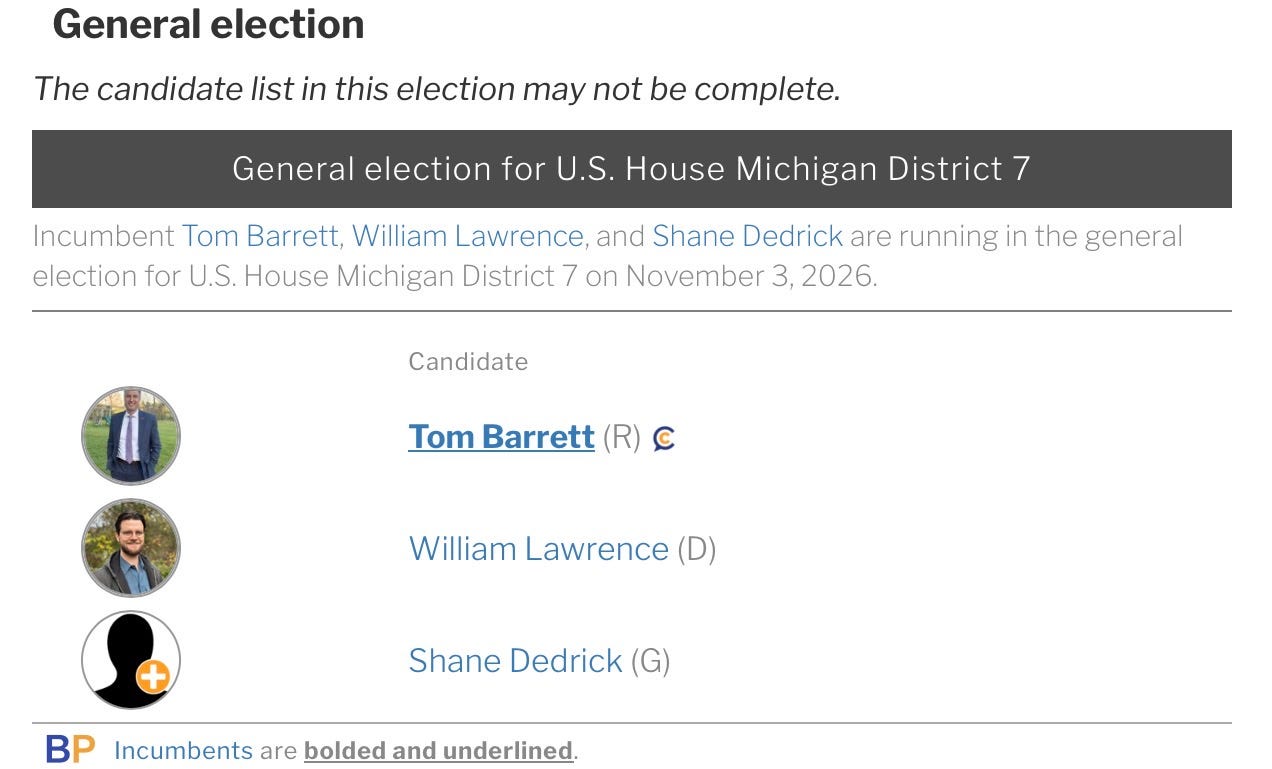
Tom Barrett (Republican) is seeking his second term in the U.S. House after having won the open seat vacated by Elissa Slotkin in 2024. Barrett is an Army veteran who had previously served in both the Michigan House and Senate chambers.
William Lawrence (Democrat) is among the most radical left-wing candidates the Democrats have running for the U.S. House in any district, let alone a moderate district in the Midwest. Until July 2026, he was a card-carrying member of the Democratic Socialists of America (DSA).
There is also a Green Party candidate, Shane Dedrick, who stands to take votes exclusively from Lawrence.
II. District Geography
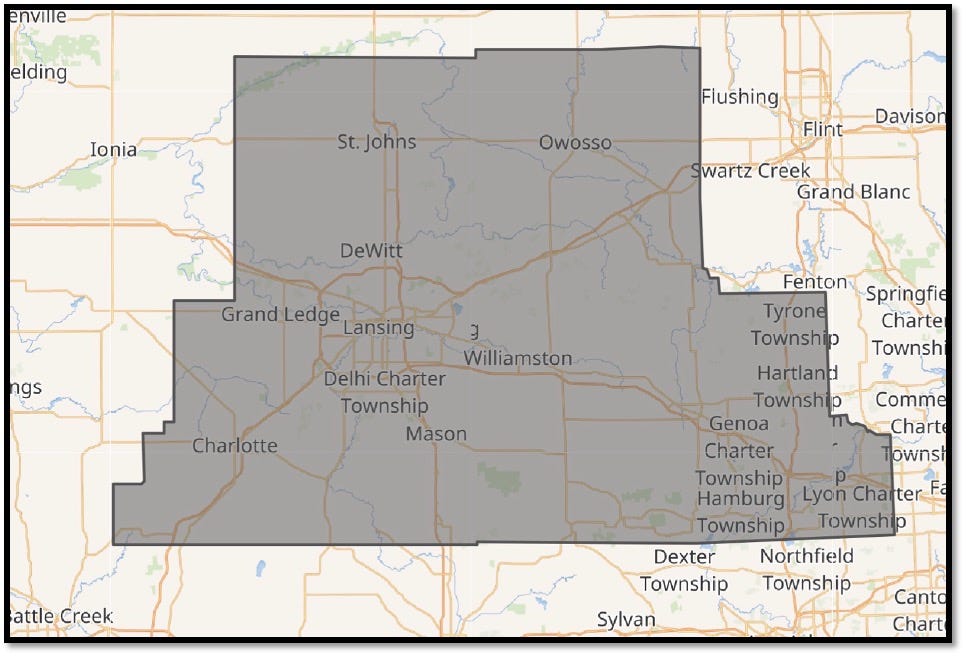
Michigan’s 7th Congressional District (MI-7) sits right in the smack middle of the state. It contains Michigan’s capital city, Lansing, and Ingham County, as well as Clinton, Livingston, and Shiawassee Counties, almost all of Eaton County, and a tiny pinch of Oakland County.
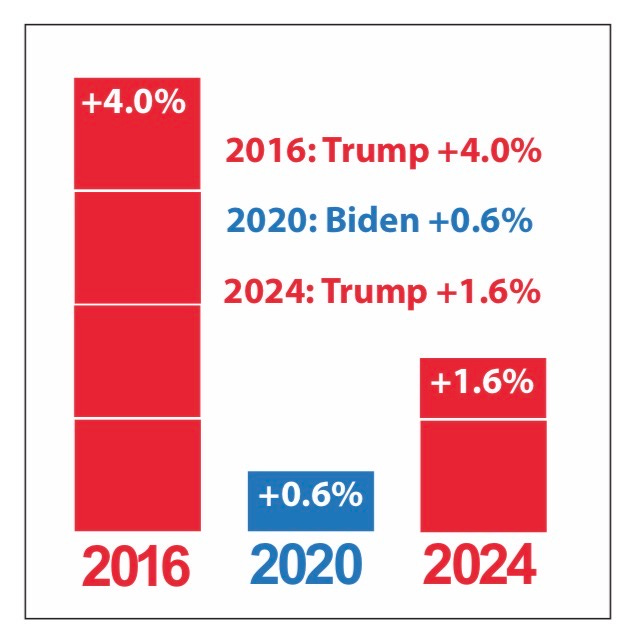
Thanks to the suburban realignment occurring in the past decade, this district has shifted away from Republicans a bit. It is down from a high point of Trump +4% in 2016, when he first flipped Michigan, to just a 1.6% presidential baseline in 2024. Some of this is owed to the expansion of mail-in balloting. Thanks to the expansion of that practice in 2020, Biden narrowly carried the popular vote in the district (as it is drawn today).
Presidential Margins
Key Statistics
79.9% White, 5.9% Black, 5.7% Hispanic
III. Market Assessment
Driven primarily by midterm vibes and the knowledge that MI-7 is a tough district with both candidates forced to play to the middle, Polymarket bettors think the Democrat, Lawrence, is a modest favorite.
IV. History
MI-7, according to Cook, rates as EVEN for its PVI rating. Its boundaries have undergone substantial redrawing and now extend further into the heart of the state than they once did, and have come to include Lansing in this decade. The Lansing portion of the district is what swung so heavily in the old MI-8, which eliminated Republican Mike Bishop in the 2018 wave and installed Elissa Slotkin, the now-Senator who spends her time comparing the president to Saddam Hussein and encouraging the military to disobey orders.
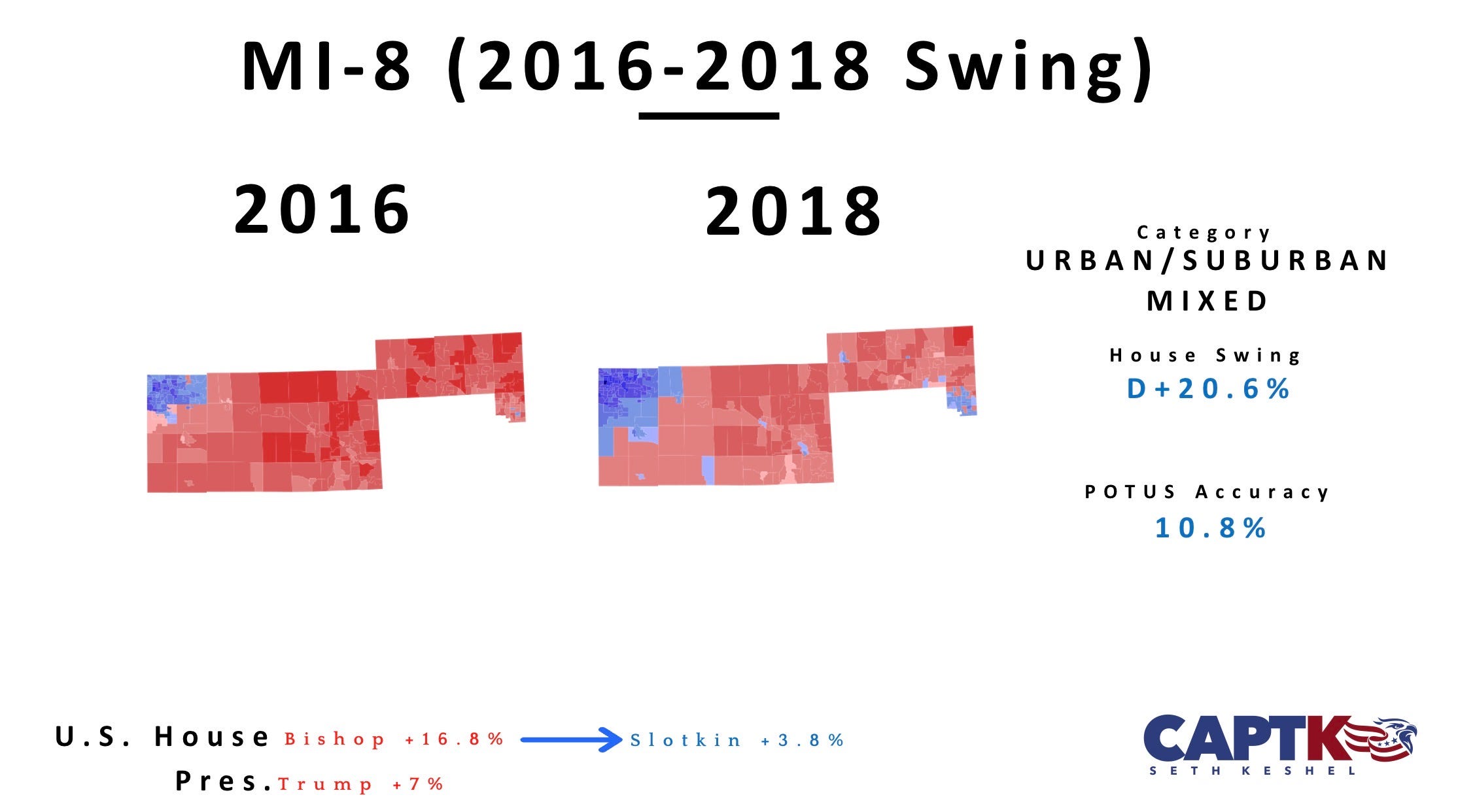
MI-8, meeting the danger profile of a Republican House representative significantly outrunning Trump on the same ticket (by 9.8%), sustained one of the most serious left swings of the entire 2018 cycle, and Slotkin held the seat in the controversial 2020 election by almost the exact same margin (+3.6%). When maps were redrawn, Slotkin’s new seat became the current MI-7 (the subject of this forecast), adding on Clinton and Shiawassee Counties (and the vast chunk of Eaton), and altering the portion of Oakland County included in the district.
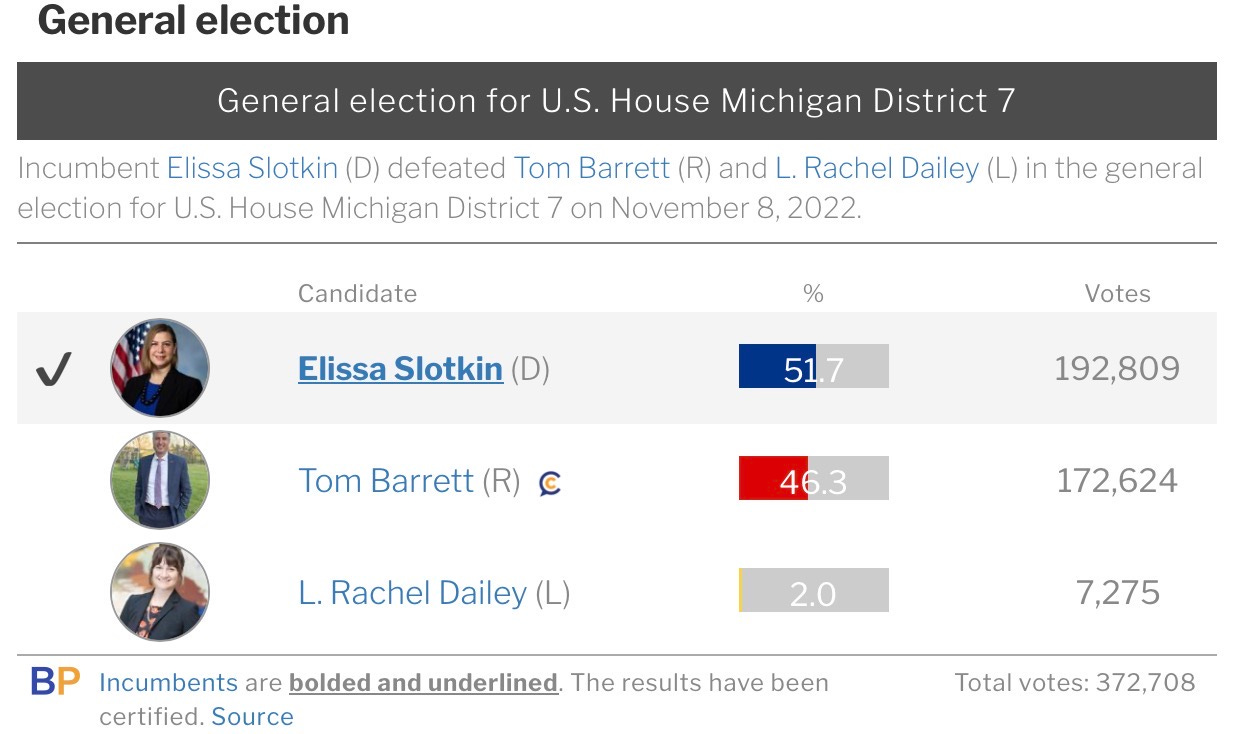
In the first race under the new boundaries, Slotkin repelled the GOP House advantage by holding the seat with a margin of +5.4% over Barrett:
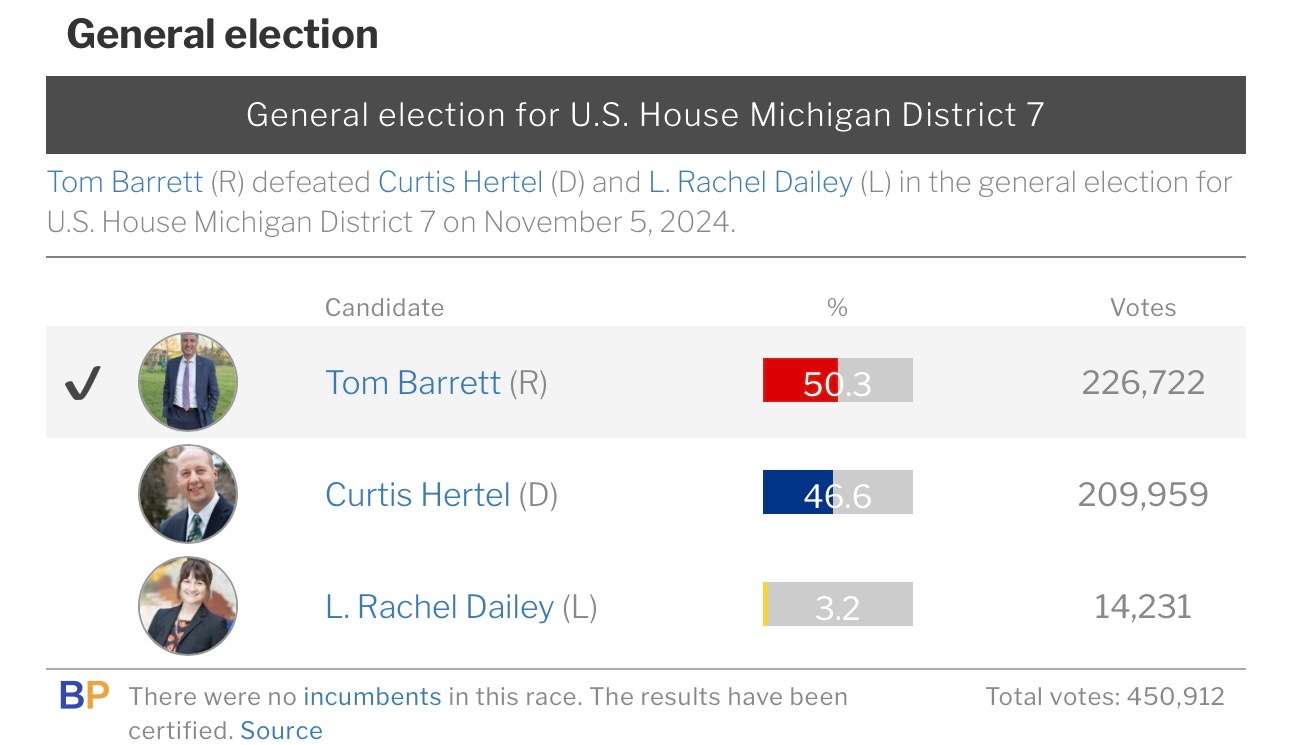
Barrett gave it another shot in 2024, with Slotkin vacating the seat to run for the U.S. Senate, and prevailed with a margin of +3.7%, with a libertarian sucking down 3.2% of the vote. It is unclear what the district baseline may be without the libertarian disruption. As it stands, Barrett ran 2.1% ahead of Trump by margin of victory, though his vote share is barely higher.
Given its urban and suburban profile, plus the capital city and major university factor (Michigan State University) present in Lansing and Ingham County alone, MI-7 immediately falls into the 2018 threat category upon first glance.
V. Analysis of 2026 Primary Results
Barrett ran unopposed in the 2026 GOP primary. Lawrence, on the other hand, prevailed in a three-person field with all candidates receiving considerable vote shares: