


Author’s Note: Other 2026 forecasts can be found in the Central File.
I. The Race
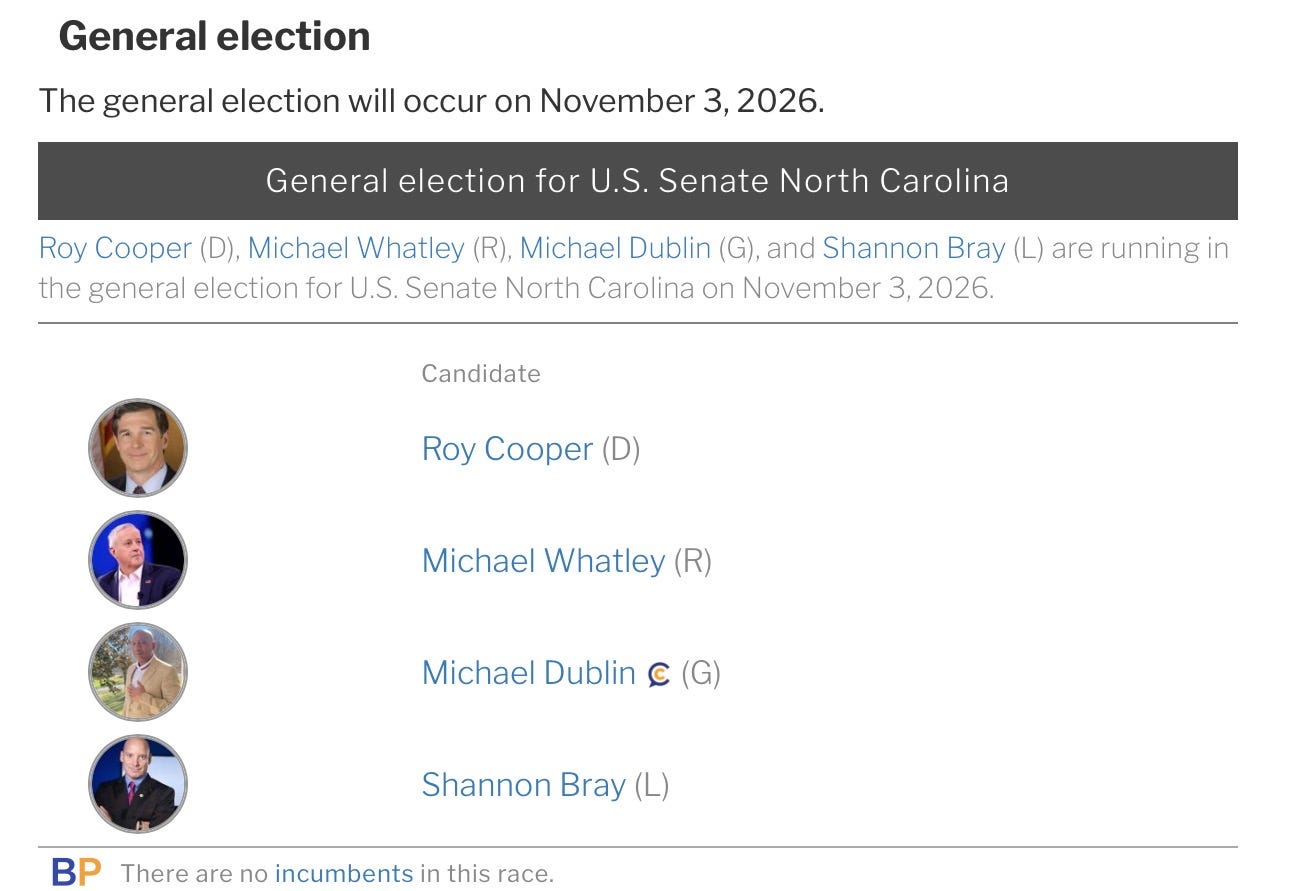
Michael Whatley (Republican) is an attorney who served in the Bush 43 administration before working in the energy industry and chairing the North Carolina Republican Party. He was RNC chairman during President Trump’s winning 2024 campaign, and now looks to fill the Senate seat being vacated by noted backstabber, Thom Tillis.
Roy Cooper (Democrat) has been a politician for 40 years, serving in the state legislature, as Attorney General, and then as governor from 2017 through 2025, when he was replaced by current governor, Josh Stein. He looks to become the first Democrat elected to represent North Carolina in the U.S. Senate since Kay Hagan, who won her last race in 2008.
II. State Profile
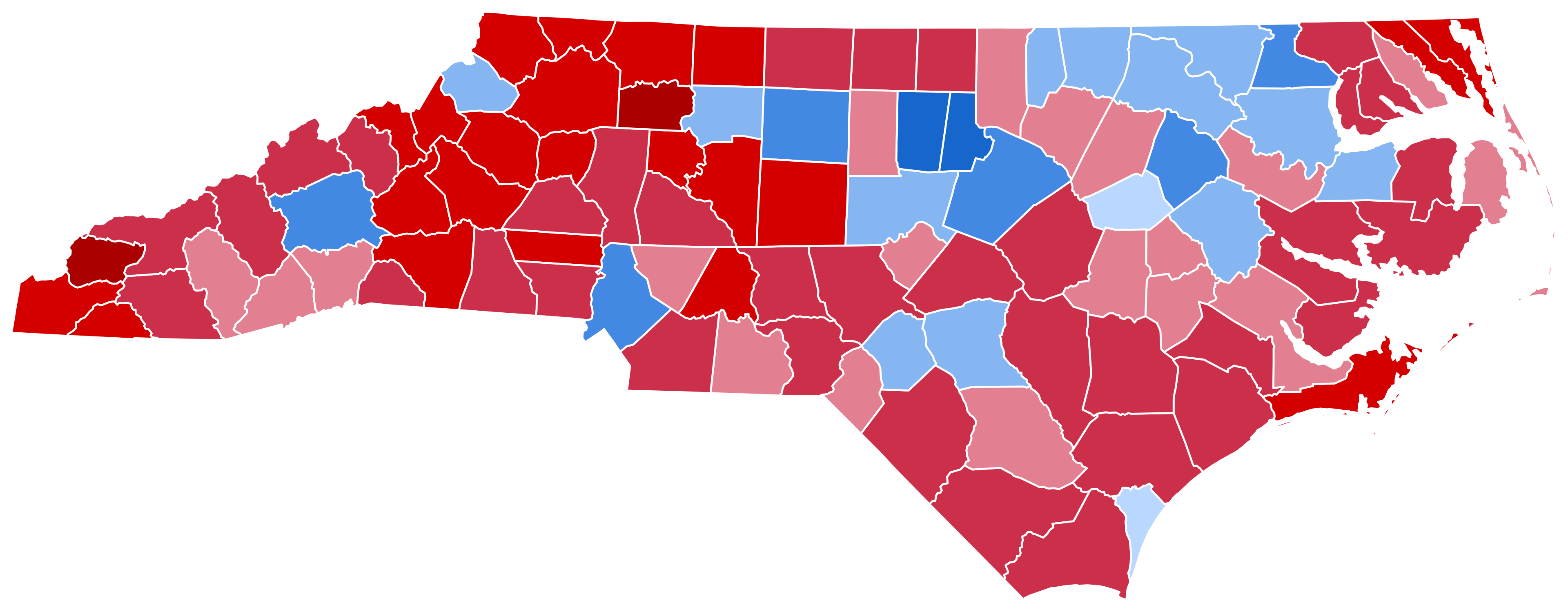
North Carolina has grown tremendously since the start of the century, when George W. Bush won it twice by more than 12 points. It represented, perhaps after only Indiana, Barack Obama’s most significant upset in the 2008 election:
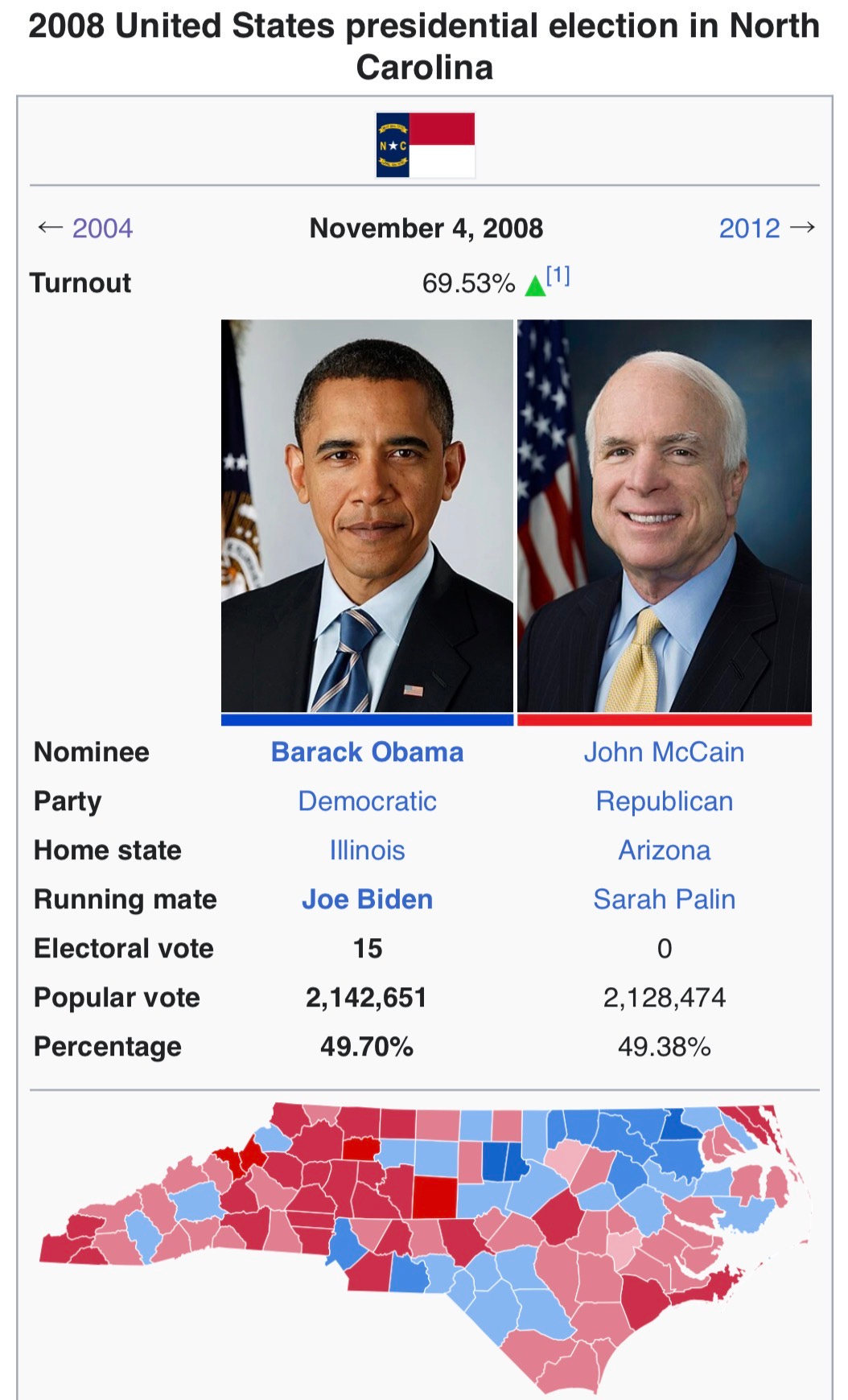
Since then, it has been won by four consecutive GOP presidential nominees:
2012 Romney +2.0%
2016 Trump +3.7%
2020 Trump +1.3%
2024 Trump +3.2%
That 2020 result, which ran 2.4% left of 2016 despite a monumental move in voter registration toward Republicans, has ironically put me at odds with Whatley for five years. I argue that election was tainted by the expansion of mail-in balloting, and he has rebutted my positions repeatedly. Nevertheless, the state is constantly growing and changing, and risks turning into Georgia if Republicans don’t right the ship. The difference between a Democrat presidential win of North Carolina and a Republican one is much different than we would have envisioned it 20 years ago.
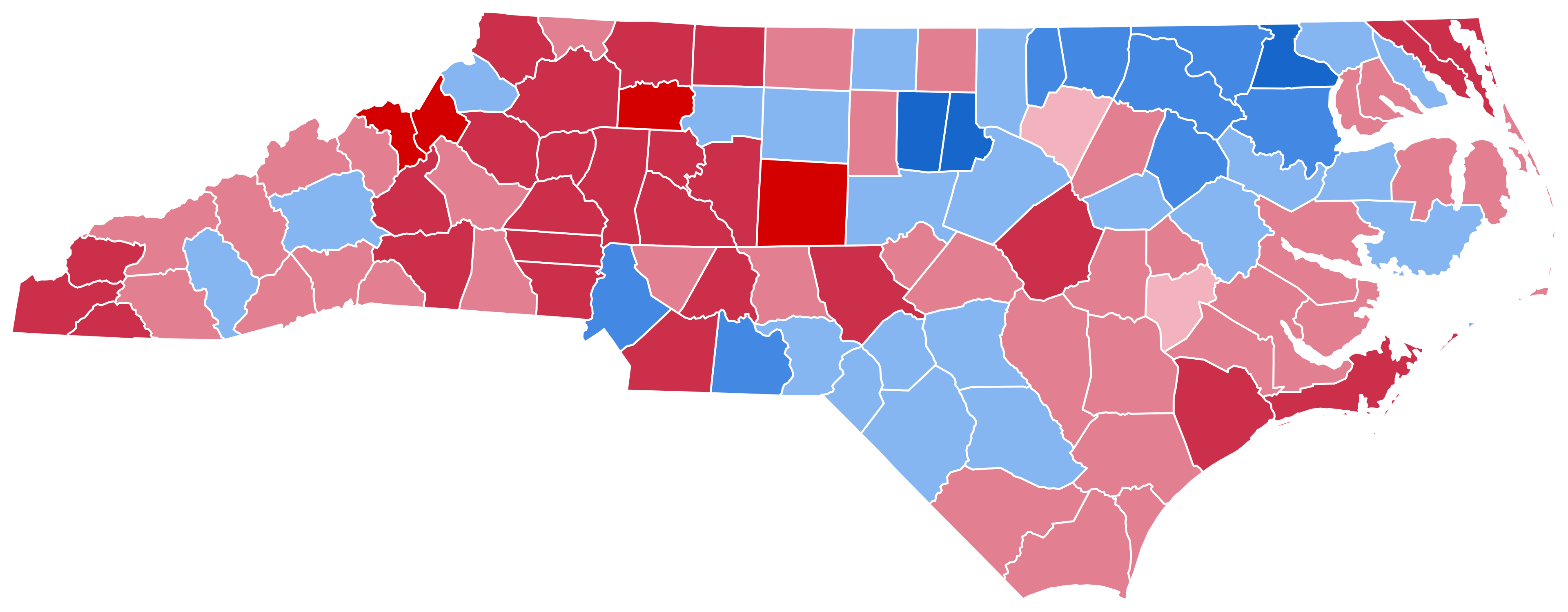
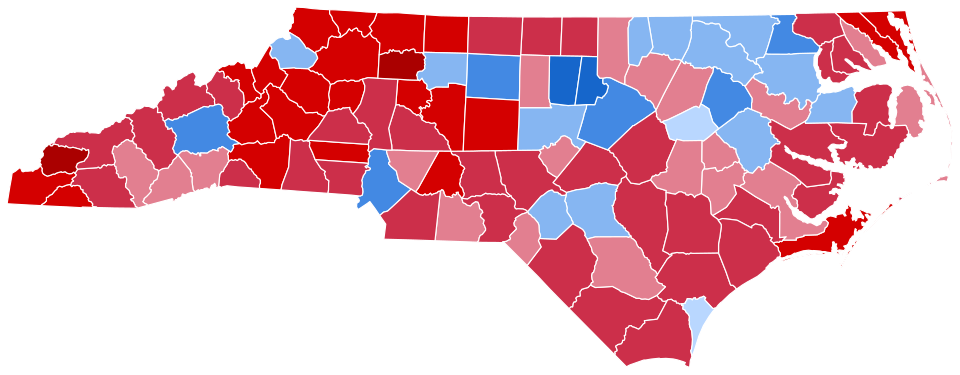
North Carolina’s Appalachian west and the southeastern coastal areas have turned a hard shade of red, whereas they were once Democrat-leaning or light pink. In the Trump era, Mecklenburg and Wake Counties (Charlotte and Raleigh, respectively) have become real liabilities - countered only by the reddening of the perimeter of the state. Had Trump won Romney’s margins outside of Wake and Mecklenburg, he’d have lost the state in 2020 and 2024.
North Carolina, as evidenced by their frequent Democrat governors, do split tickets. Here is the map from Stein’s 2024 victory, concurrent with Trump on the ticket:
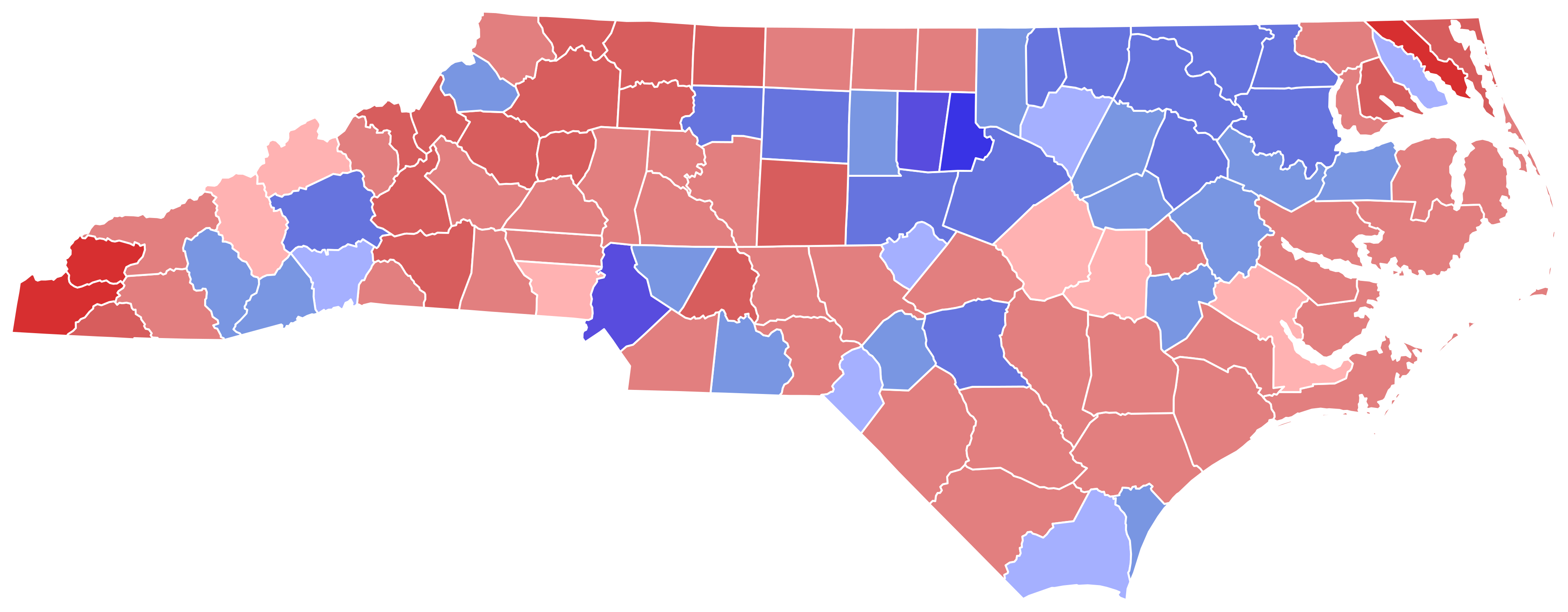
As I will demonstrate with party registration figures later in this article, North Carolina does not possess widespread loyalty to the Republican Party, especially in rural areas like it does in states like Texas, Georgia, or in the heartland. The largest metro areas are hardcore Democrat strongholds now, and the combination of these two factors gives Democrats a chance to win despite GOP progress throughout most of the state’s geography.
Key Statistics
60.5% White, 20.2% Black, 10.7% Hispanic
III. Market Assessment
Polymarket bettors feel even more confident in Roy Cooper than they do in Jon Ossoff in neighboring Georgia.
IV. History
Republican Jeter Pritchard left the United States Senate in 1903, and with it, so did North Carolina’s GOP influence on the chamber for many decades. It was until 1972 that the Tar Heel State elected another Republican when it sent Jesse Helms to Washington, D.C. He declined to run for a sixth term in 2002, and was replaced by Elizabeth Dole, whose husband was none other than the legendary Bob Dole.
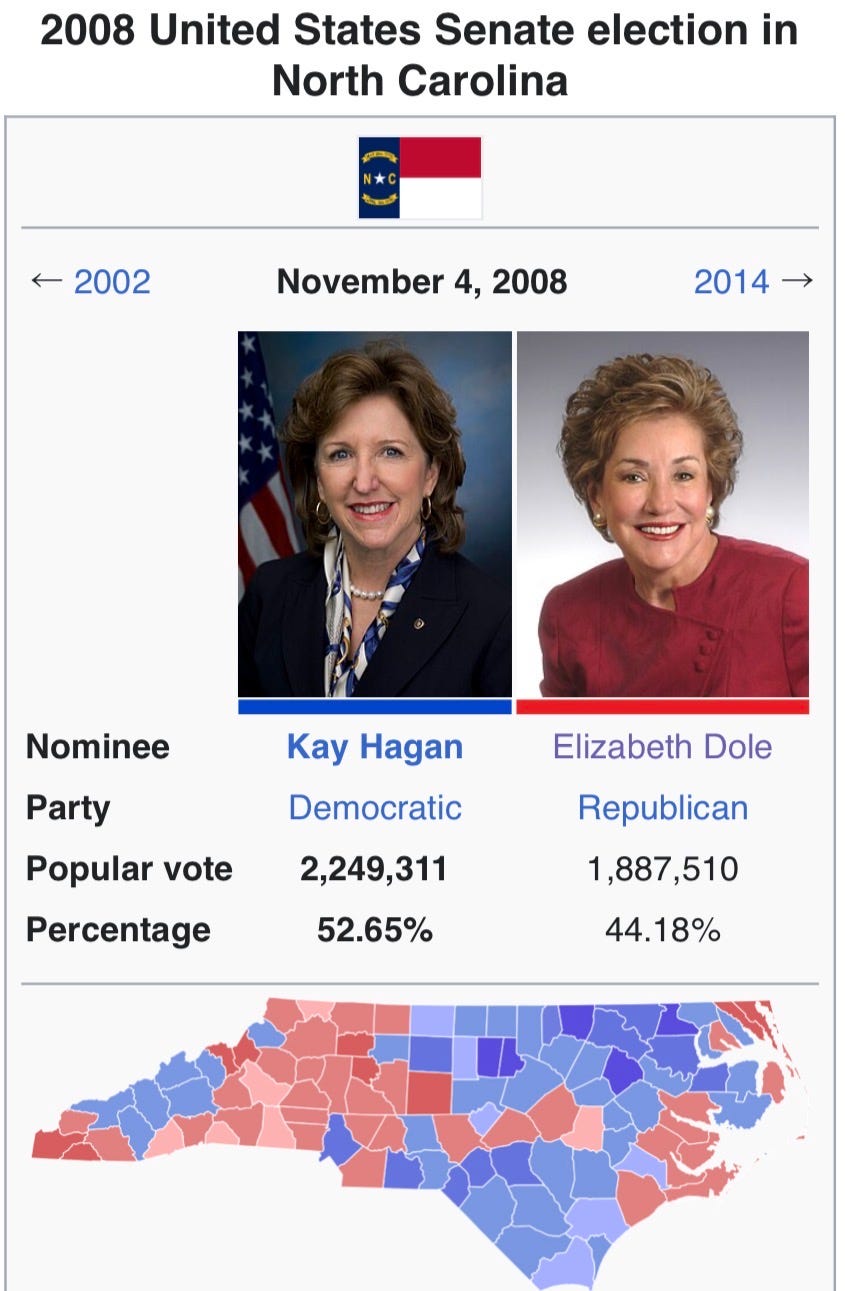
Her opponent in 2008, Kay Hagan, rode Obama’s statewide upset and ancestral Democrat strength to her own victory, and by a large margin:
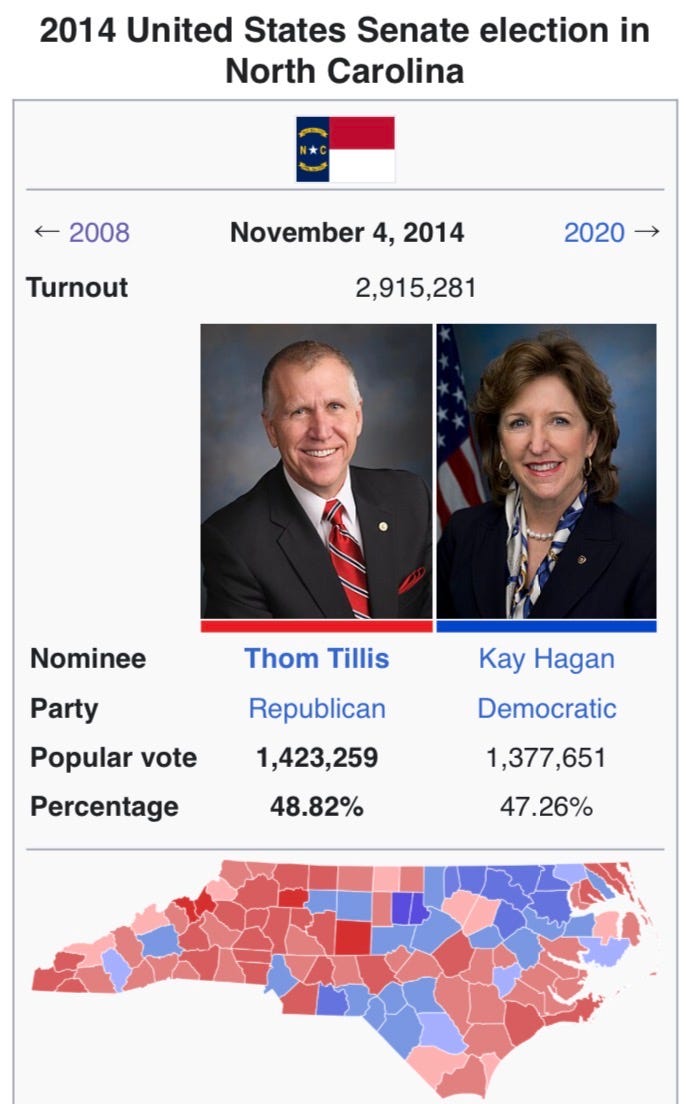
With North Carolina trending red during the Obama days, Hagan was ousted by Tillis in the 2014 GOP wave in a 1.6% squeaker in which hardly anyone voted:
Tillis was reelected in 2020, and only by 1.7%, after Democrat Cal Cunningham had a late-breaking scandal that most likely shifted things to the incumbent. Tillis then went on to antagonize the Republican base and hamstring President Trump at every turn, leading to Trump making it clear that he could retire or be brutally primaried like John Cornyn or Bill Cassidy.
Tillis Down: Don’t Stand on the Tracks When the Train is Coming Through

In May, I wrote a feature piece highlighting Thom Tillis’s incompetence as one of North Carolina’s Republican U.S. Senators and correctly asserted that his weakness jeopardizes the GOP majority for 2026 and weakens its power as long as he remains in office. From that article:
The other Senate seat, currently occupied by Republican Ted Budd, has had a mix of Democrats and Republicans stretching back to 1981. In short, history shows Democrat competitiveness in the Senate even in recent, redder times, with an incumbent who never won by more than 1.7% leaving the seat open in a year that is supposed to be favorable to Democrats.
V. Analysis of 2026 Primary Results
Cooper faced five candidates in the Democrat primary, but bludgeoned them mercilessly in taking 92.0% of the vote. It was decisive, and as a result, there is no Democrat intraparty drama in the way of the General Election.