


In the wee morning hours of Saturday, June 13, Rachel (my wife, the Arizona State Representative) and I were texting back and forth. She had expected to be done with what was finally the last day of the 2026 legislative session many hours before - perhaps in time to catch dinner. Instead, the night dragged on and on. I received many updates - some not so fit to publish, others irritating, and some mundane - until the big one came:
We just got the elections bill through and it will be on the ballot!
She was referring to House Concurrent Resolution 2001, also known as the Arizona Secure Elections Act, sponsored by Rep. Alex Kolodin (the best choice for GOP Secretary of State nominee) and co-sponsored by several other Republicans, including Rachel.
This is a big deal.
Republicans have been trying to get election reforms through with their relatively (compared to years past) small majorities in the House and Senate, and run up against that narrow margin for error from time to time; however, the most obstructive force is the dubiously elected Katie Hobbs, whom I describe in unique terms in my book, The American War on Election Corruption:
Ironically, Hobbs’s 2018 opponent, Republican Steve Gaynor, had been called the winner on Election Night, only to have that lead suspiciously slip away, vaulting Hobbs to the second-highest office in the state and her moment in the sun to rip off not only Arizona’s electoral votes in 2020, but its top office in the very next cycle. Even after a makeover, she was and is an uninspiring, uncharismatic, former state legislator who speaks to people of a conservative state as if they were residents of San Francisco, and despite propagandized polling, few expected her to stand a chance against Lake, who had a solid lead in the final average of polls, including one outlier from Fox 10 Phoenix/Insider Advantage with Lake up by 11, just a few points shy of Ducey’s blowout reelection margin from 2018. So uninspiring is Hobbs that most Arizonans couldn’t pick her out of a lineup three years after she hid from Kari Lake at every opportunity and was installed by a corrupt coalition of subversives to govern Arizona.
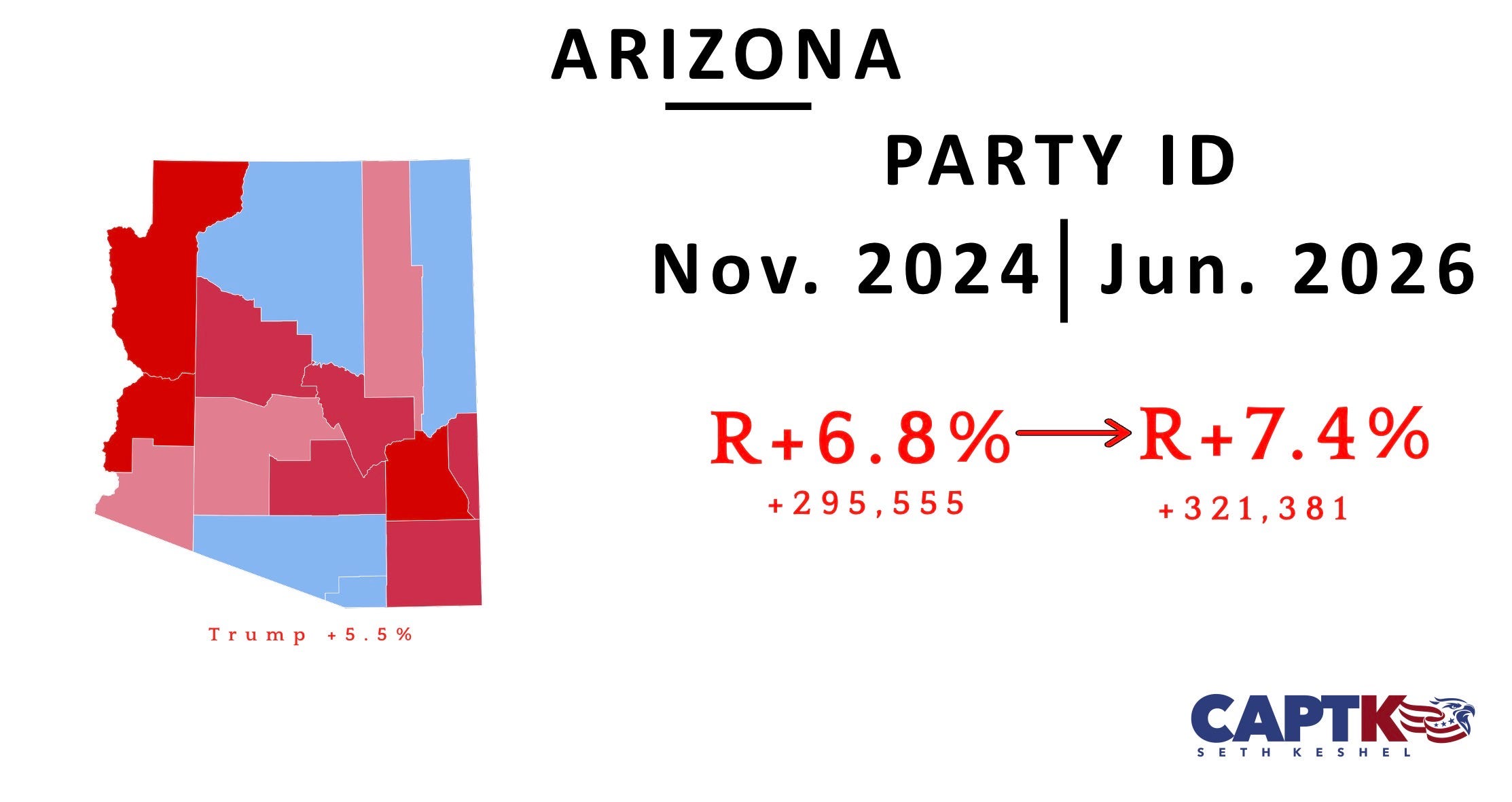
In the long run, Arizona gives me Florida vibes, to a lesser extent. The state sits well to the right of its 2020, 2022, and 2024 voter registration index, and on paper, I’ve had a difficult time seeing how Andy Biggs doesn’t beat Katie Hobbs in November. Eagle eye and lifetime Captain K’s Corner subscriber Michael McDonald has heard my Biggs math many times:
How to Make Money on Politics - Arizona Edition

In the closing weeks of the 2024 election cycle, I learned I had become a secret weapon for gamblers who were looking to cash in on President Trump’s impending victory. See if you can spot the one-month spike in my paid memberships:
I like Biggs for several reasons:
Hobbs’s low approval and performance
Arizona’s pro-Republican voter registration shifts in all 15 counties since the 2020 election
Roots in both major urban areas, Congressional experience, and non-threatening image combined with Trumpy ideology and voting record
Mormon - in a state where they do well with the Mormon vote, which is the softest Republican vote in the state and the one responsible for the state getting close enough to steal
I’m not sure if I could use Artificial Intelligence to create a better candidate on paper. Yet here we are, less than five months until Election Day, and this is the quietest major gubernatorial race in the country. Barely a peep, and the fake polling showing Hobbs up by as many as 10 points influences those who are making forecasts. You’ll find practically no one who thinks Biggs will win online outside of Arizona, and to make matters worse, David Schweikert won’t drop his vanity campaign in order for Biggs to get in General Election mode. Maybe they’re waiting to turn up the heat, but I’m sensing a decency campaign afraid to offend people while campaigning against a feminist governor who rigged her own election to the state’s highest office.
All that hope the Arizona legislature had in ramming through every election bill under the sun depended on getting Biggs in office, which is looking like anything but a certainty. Until…
The actions of June 13, 2026. Let me explain why this bill is a huge deal.
