


Author’s Note: Other 2026 forecasts can be found in the Central File. This forecast/prediction contains proprietary mapping data beyond the paywall information prepared by the author for analytical purposes.
I. The Race
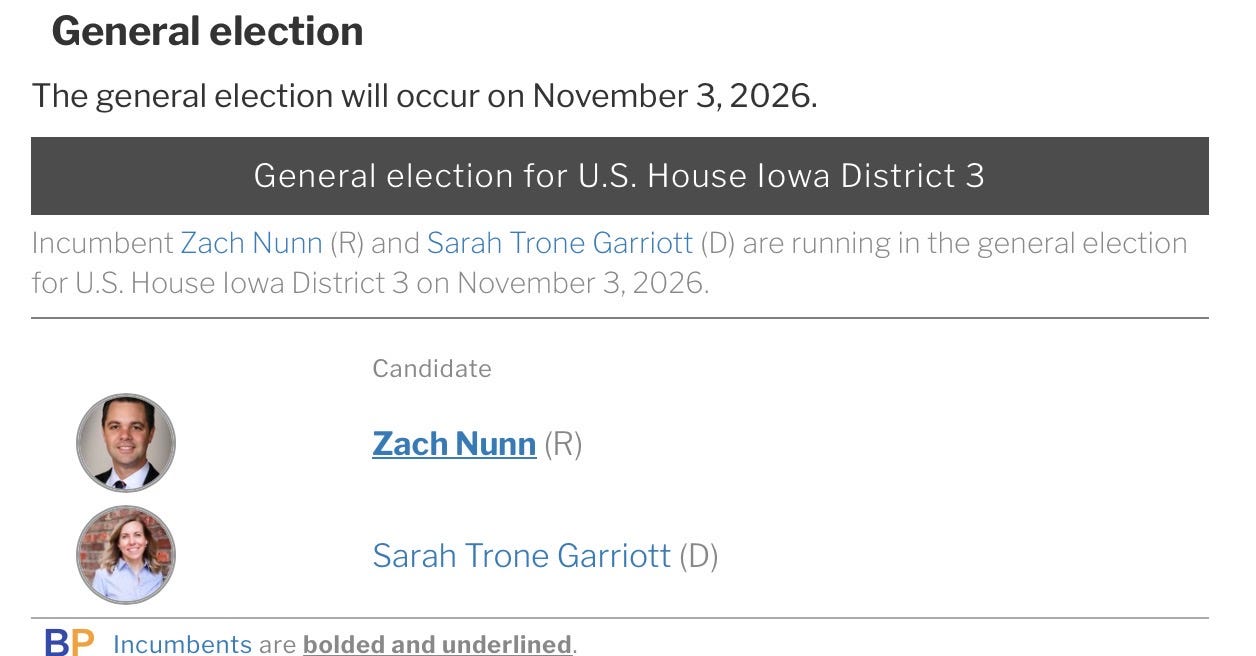
Zach Nunn (Republican) is an Air Force Reserve Colonel with serious combat experience. He was once a member of the Iowa legislature, and has represented IA-3 since first being elected in the 2022 GOP House victory and now seeks his third term.
Sarah Trone Garriott (Democrat) is an Iowa state senator with a background in religious studies. She is running a “kitchen table” campaign that is relatively careful about not becoming “Trump-centered,” with the understanding that Iowa supported Trump by a wide margin. This is her first attempt at Congress.
II. District Geography
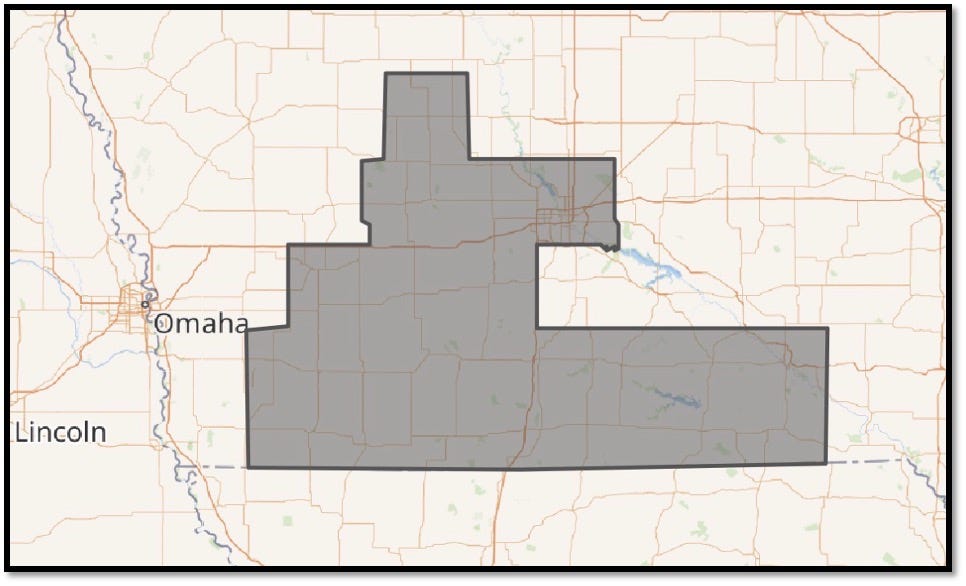
Iowa’s 3rd Congressional District (IA-3) occupies the southwestern portion of the state (all but the very corner), and contains the capital city of Des Moines and its most electorally significant suburban areas - and a total of 21 counties. Since Iowa doesn’t gerrymander, this seat (just like IA-1) is extremely competitive. A Republican state that wanted to win would figure out how to split half of Des Moines into IA-4, which is overwhelmingly red. As such, the clash between urban/suburban and farmland produces tight margins in presidential and House elections. Here is how President Trump fared in all three of his races in the current boundaries of IA-3:
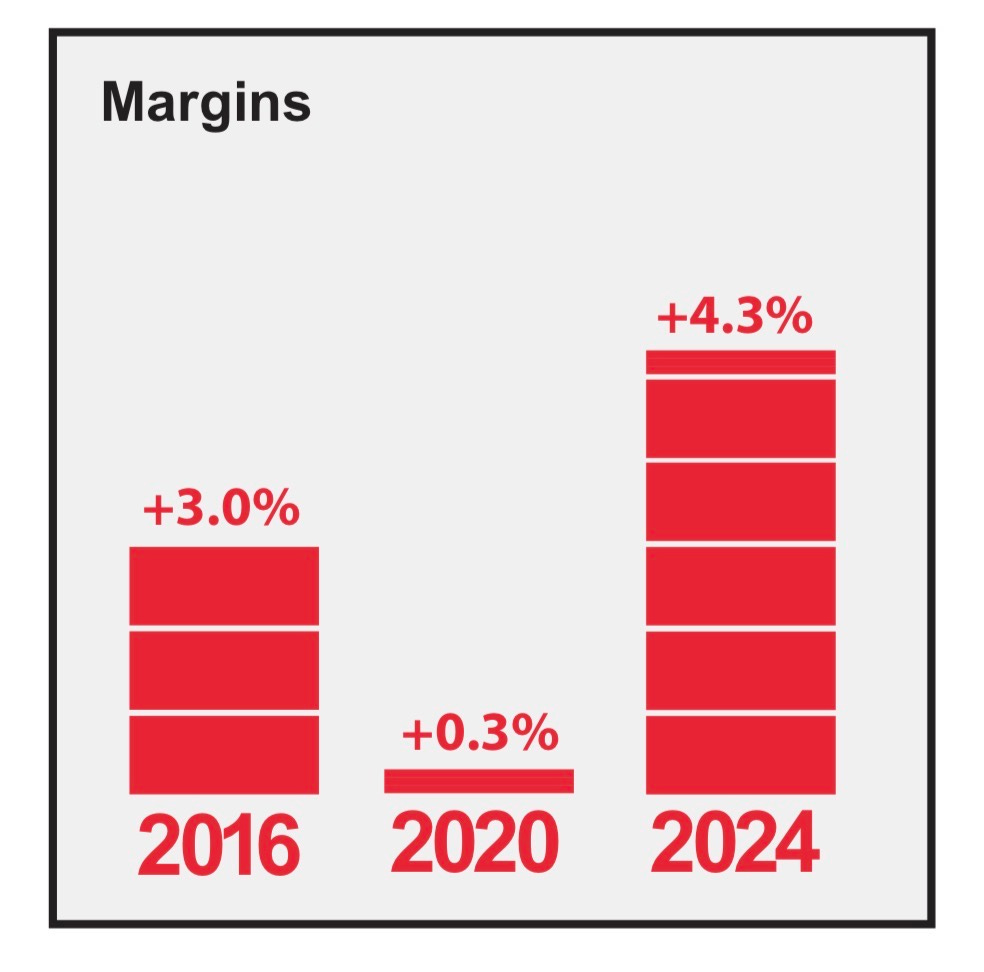
IA-3 sits well to the left of the state as a whole. Trump had to carry Iowa by over 13 points in 2024 just to take IA-3 by 4.3%; he hasn’t been helped by the suburban drift of Dallas County, which is just west of Polk County (Des Moines), that has taken place over the past decade. The rurals are about volume of turnout. The metropolitan Des Moines area is about persuasion.
III. Market Assessment
Polymarket bettors overwhelmingly favor Trone Garriott, who is vastly overpriced.
IV. History
Des Moines and the rest of Iowa’s districts have moved around a lot in recent decades. In 2010, the last election of the first decade of the 21st century, Iowa’s U.S. House map looked like this:
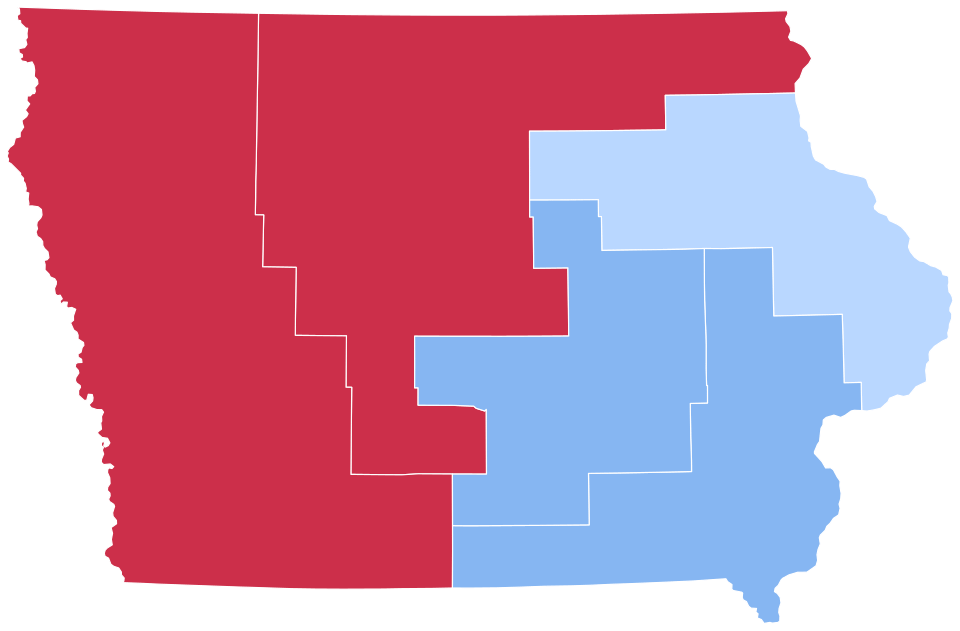
Iowa lost an electoral vote going into the next decade and then split its lines in a different pattern, putting Des Moines and IA-3 into a district more closely resembling the one Nunn is defending now. Republican David Young, running for reelection alongside President Trump’s first campaign in Iowa, won his 2016 race by 13.7%. Young then turned around in 2018 and lost the seat by 2.2% to Cindy Axne, who proceeded to narrowly defeat him in a 2020 rematch.
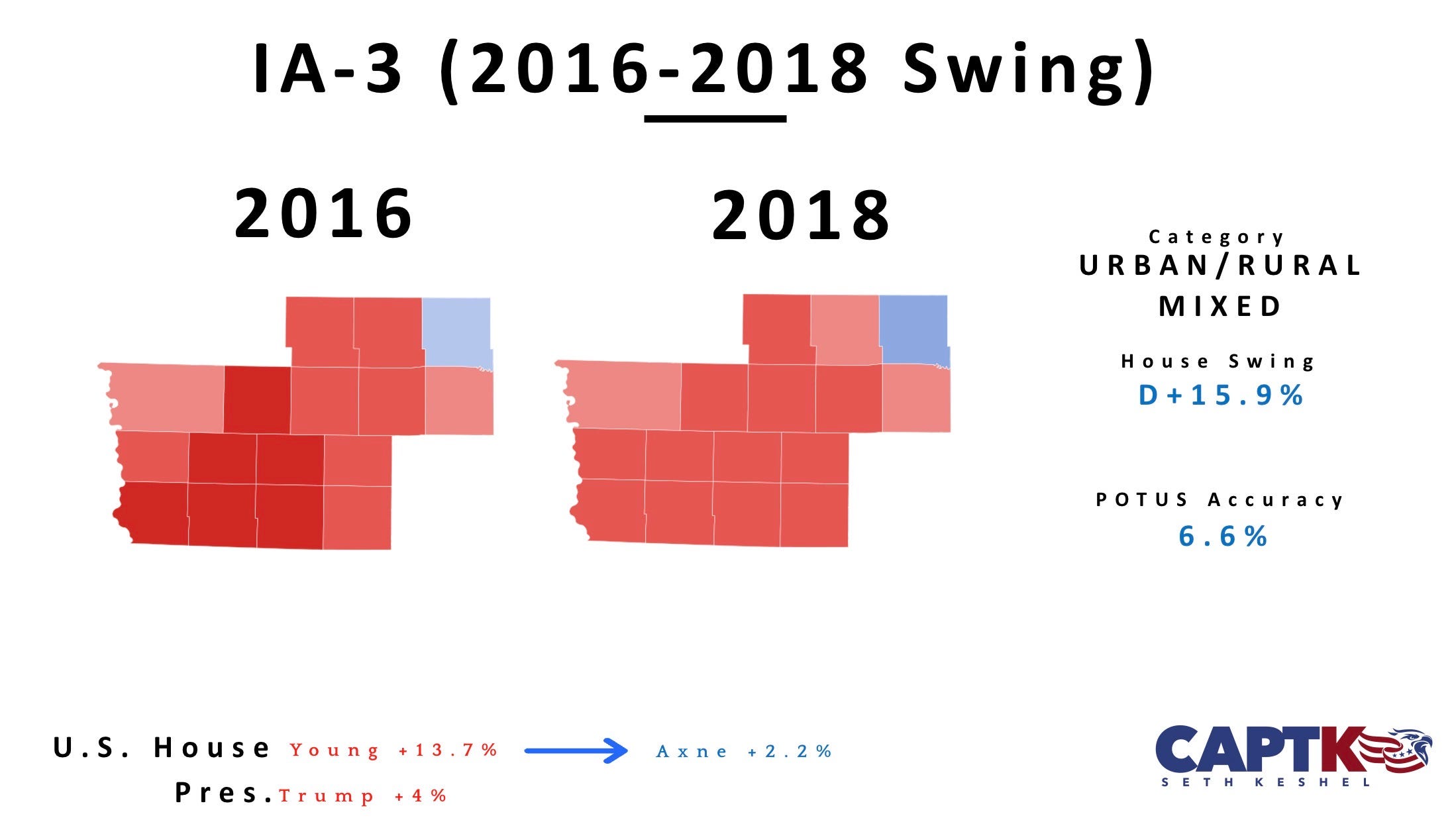
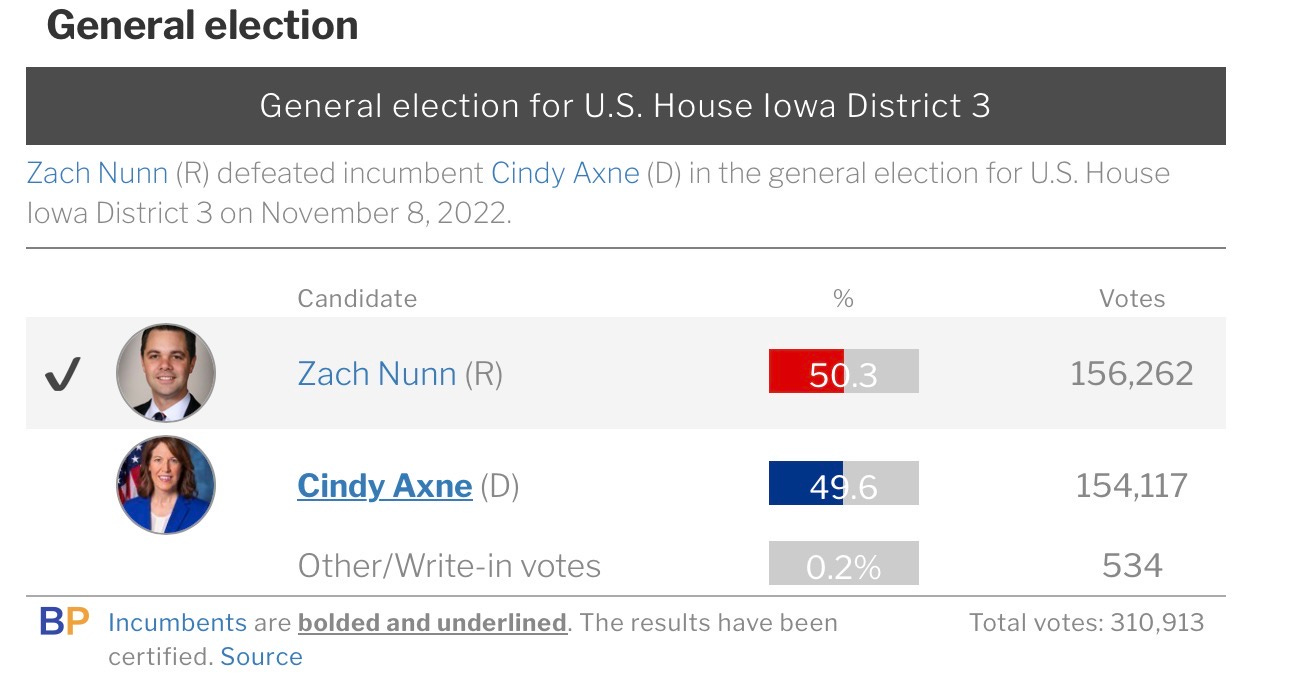
IA-3 met the key warning sign for a 2018 flip - a seat with a major metropolitan area in which President Trump massively underperformed the Republican House candidate. The districts were redrawn yet again, and in their current form, Nunn knocked Axne out in the 2022 GOP House takeover, and by a very narrow margin of just 0.7%:
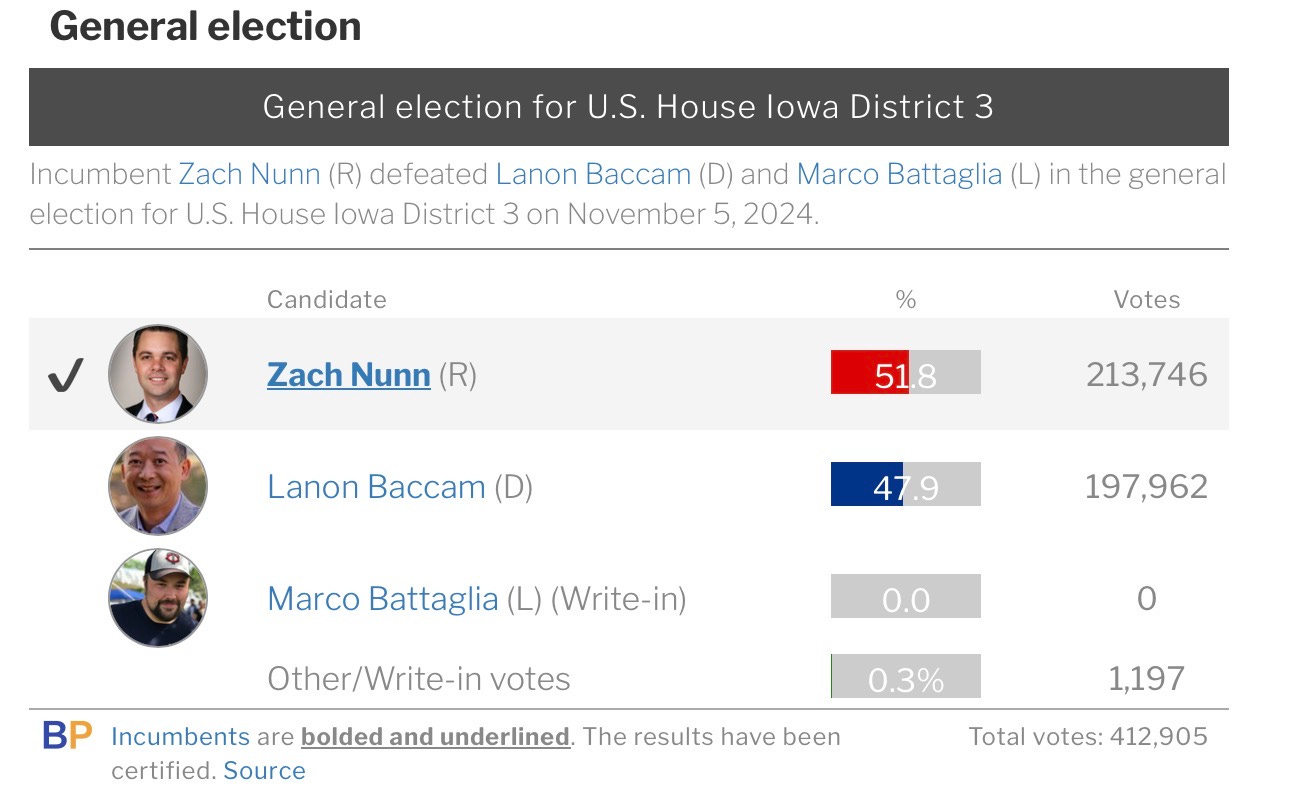
Thanks to Trump’s statewide blowout, Nunn ran up a very impressive margin compared to what IA-3 is normally capable of:
Nunn must hope that rural turnout is overwhelming knowing just how strong the shift in metropolitan Des Moines was in 2018.
V. Analysis of 2026 Primary Results
