


Author’s Note: Other 2026 forecasts can be found in the Central File.
A special one-year offer to become a paid subscriber is available for 12 more days:
I. The Race
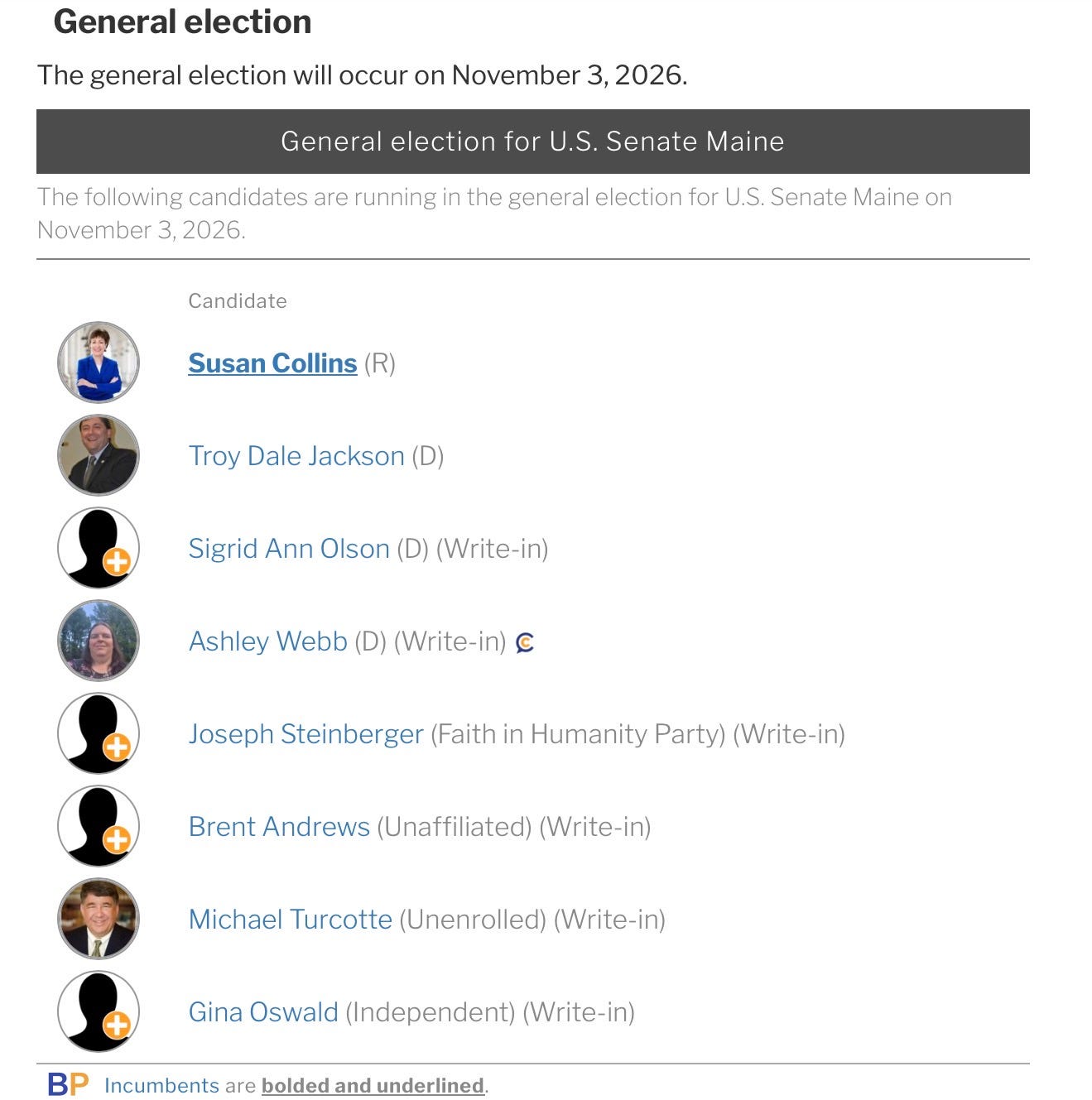
Susan Collins (Republican) is seeking her sixth term in the U.S. Senate, and is the only Republican in all of Congress from any of the six New England states. She last won reelection in 2020 by 8.6% in a COVID-marred election.
Troy Jackson (Democrat), a former state Senator, began 2026 running for the Democrat gubernatorial nomination. He lost the race, but received the Senate nomination after the Democrats torpedoed the scandal-ridden Graham Platner, whom I have written about often this year.
The Oystergruppenführer Counteroffensive

Democrats have been so desperate to make gains with male voters that they nominated a ticking time-bomb to take on the most moderate of all moderates, Susan Collins, in a must-win Senate race this year. And you’d better believe it, the bill is coming due.
II. State Profile
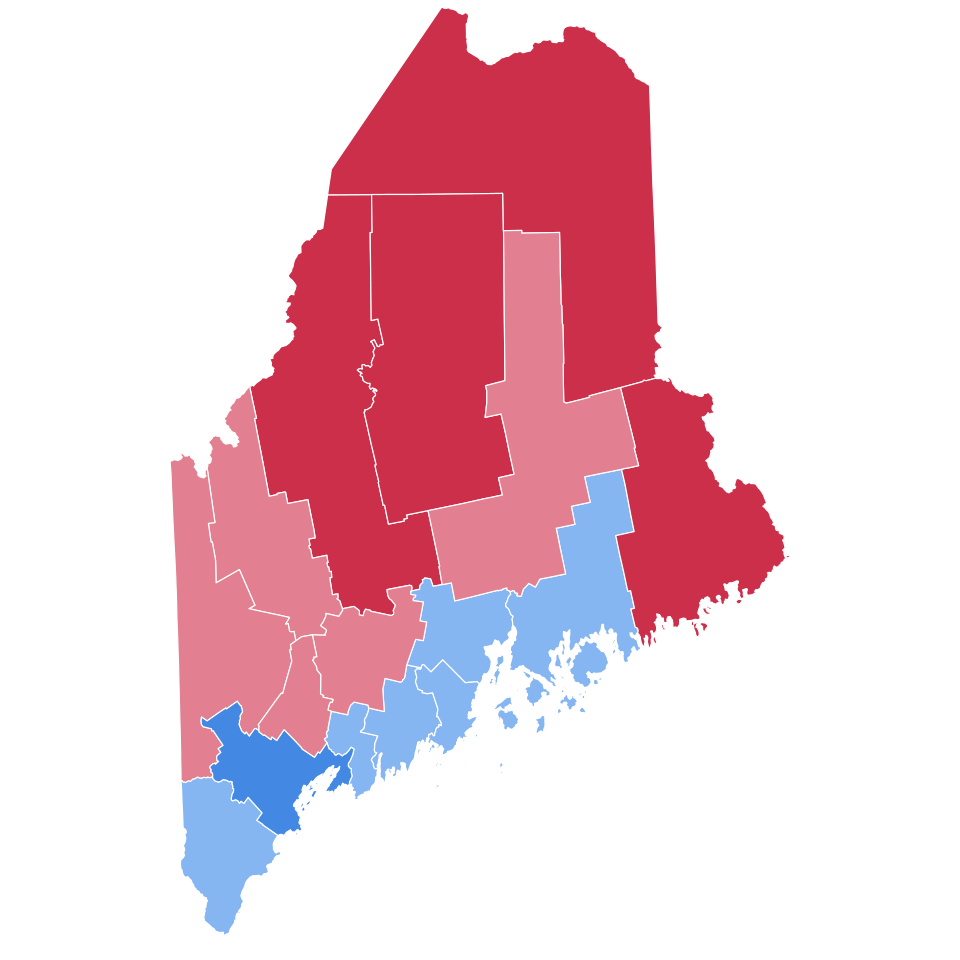
Maine was once an impenetrable Republican fortress when it came to presidential preference. The state backed all but three GOP presidential nominees between 1860 and 1988 before flipping into perma-blue status in 1992. It is one of two states (the other being Nebraska) that splits its electoral votes; Donald Trump carried ME-2 (northern Maine) all three times he ran for president, but struggled to compete in ME-1 (southern Maine). Troy Jackson’s brand is “working man from northern Maine,” and it is clear he is looking to peel away as much GOP identity as possible there to ride the partisanship in the southern and coastal portions of the state that Collins has managed to flout.
The state is lily-white, but remains loyal to Democrats because the southern portion of the state votes harder for Democrats than the northern portion votes for Republicans like Trump:
2016 ME-1 Clinton +14.8%; ME-2 Trump +10.3%
2020 ME-1 Biden +23.1%; ME-2 Trump +7.4%
2024 ME-1 Harris +21.6%; ME-2 Trump +9.1%
From my 2024 Leaner Deep Dive of Maine:
Democrat strength is clustered in the far southern end of the state, with Cumberland (23.7%) and York Counties (15.8%) combining for nearly 40% of the statewide ballot count in the 2020 presidential race. The northern part of the state, which falls into ME-2, is much more favorable for Republicans with a working-class agenda but splits its votes (Democrat congressman) and cannot regularly overtake the massive Democrat margin of Cumberland County (metro Portland), which dwarfs the next largest margin for either party by nearly 10%.
Demographic Statistics
94.4% White, 1.5% Hispanic, 1.2% Black
III. Market Assessment
Poll-believing apes are throwing money around for Democrats, but Collins is trading a lot higher than she was earlier this summer as people start to research her past races.
IV. History
The forecast for this race hinges on Collins’ specific history in winning this seat on five different occasions. There is no national comparison, no bellwether, and no proxy state to measure - she is the only member of Congress from the Republican Party representing any New England state, and that is for good reason.
For those of you who hate polling as much as I do, 2020 Maine Senate is a textbook museum display piece:
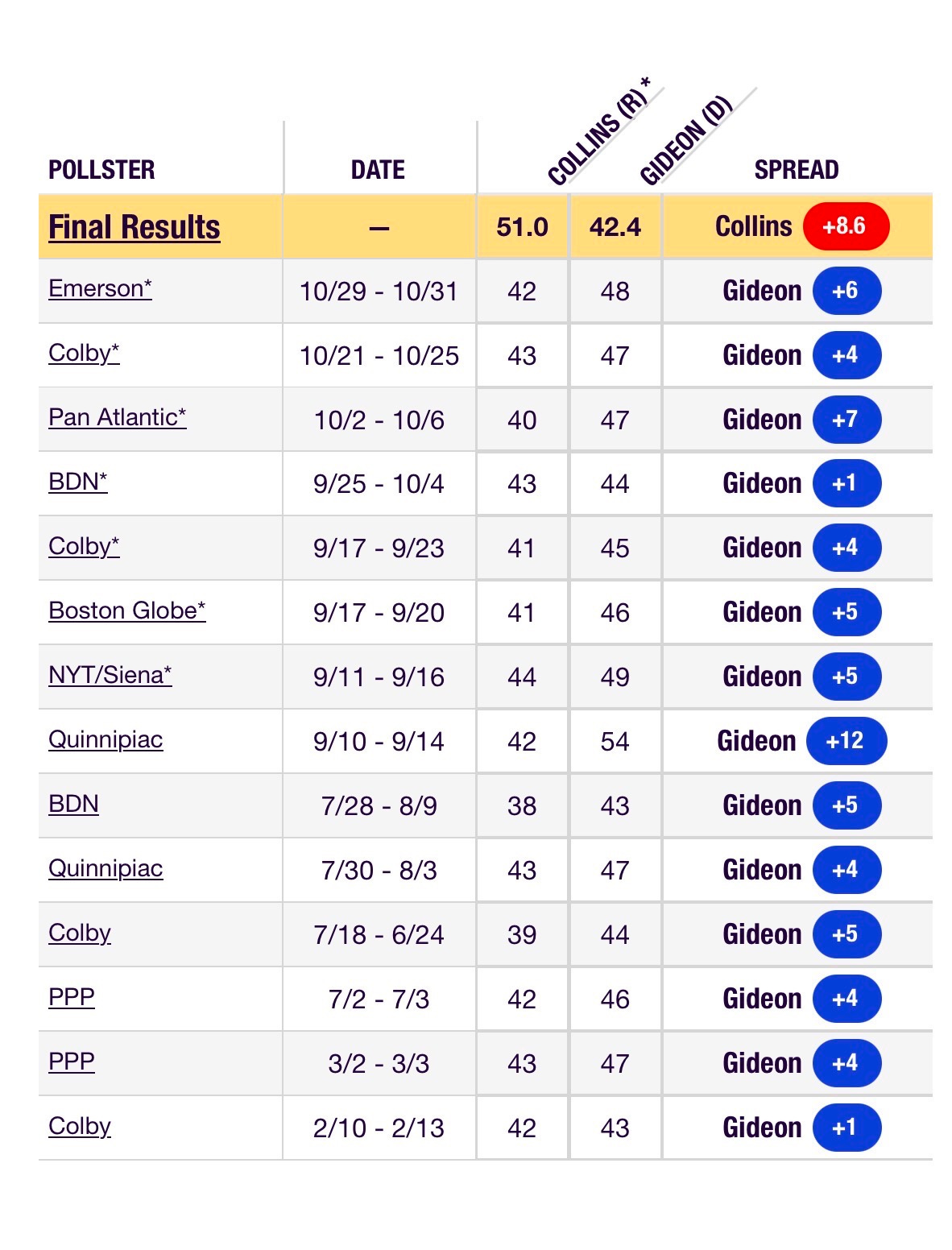
Not one damn poll had Collins leading. She wound up winning by nearly 9 points, roughly 18 points ahead of Donald Trump on the same ticket. She torpedoed a highly-regarded Democrat up-and-comer; in 2014, she laid the lumber to Shenna Bellows, the crooked Democrat Secretary of State who tried, but failed, to keep Trump off the state’s ballot in 2024. The beating was merciless, with a +37% margin and win of every county for Collins, who was defending in an apocalyptic year for Democrats.
In 2020, with a presidential electorate and modern polarization serving as a test, Collins lost ME-1 by 5 points, but won ME-2 by 24 points, 18 and 17 points ahead of Trump, respectively. Her model has proven simple - limit the damage in ME-1, and blow out ME-2. Jackson is trying to count on polarization in ME-1 and shaving margin in ME-2, but he has a major problem from the not-so-distant past looming over his shoulder.
V. Analysis of 2026 Primary Results
This is where the water gets really choppy. Collins ran unopposed, with enough Republican Mainers having the sense to accept her squishy nature, which I recommended last August:
Primarying Susan Collins is a Mistake

In June, I previewed the 2026 races for U.S. Senate and determined it would take a year from hell to remove the Republican majority from the chamber; this differs from the race for the House majority, which is anyone’s guess at this moment with redistricting up in the air and the fierce headwinds historically sustained by the President’s party.
The Democrats essentially experienced Götterdämmerung after having allowed Graham Platner to make it all the way through the official primary as the nominee. Once it became clear the image-conscious moderate weaklings in southern Maine wouldn’t vote for a literal Nazi who recounts his deployment bowel movements and fantasizes about political violence, they moved onto sexual assault stories and ran him off faster than you can say Joshua Lawrence Chamberlain.