


I frequently make reference to Barack Obama’s 2008 landslide win against John McCain, which elevated him to the presidency. The national transition in support away from an eight-year GOP presidency was clear in the voter registration numbers throughout the country, and in that election, 45 of 50 states shifted toward Obama and away from the GOP. Here’s a textbook example using Pennsylvania:
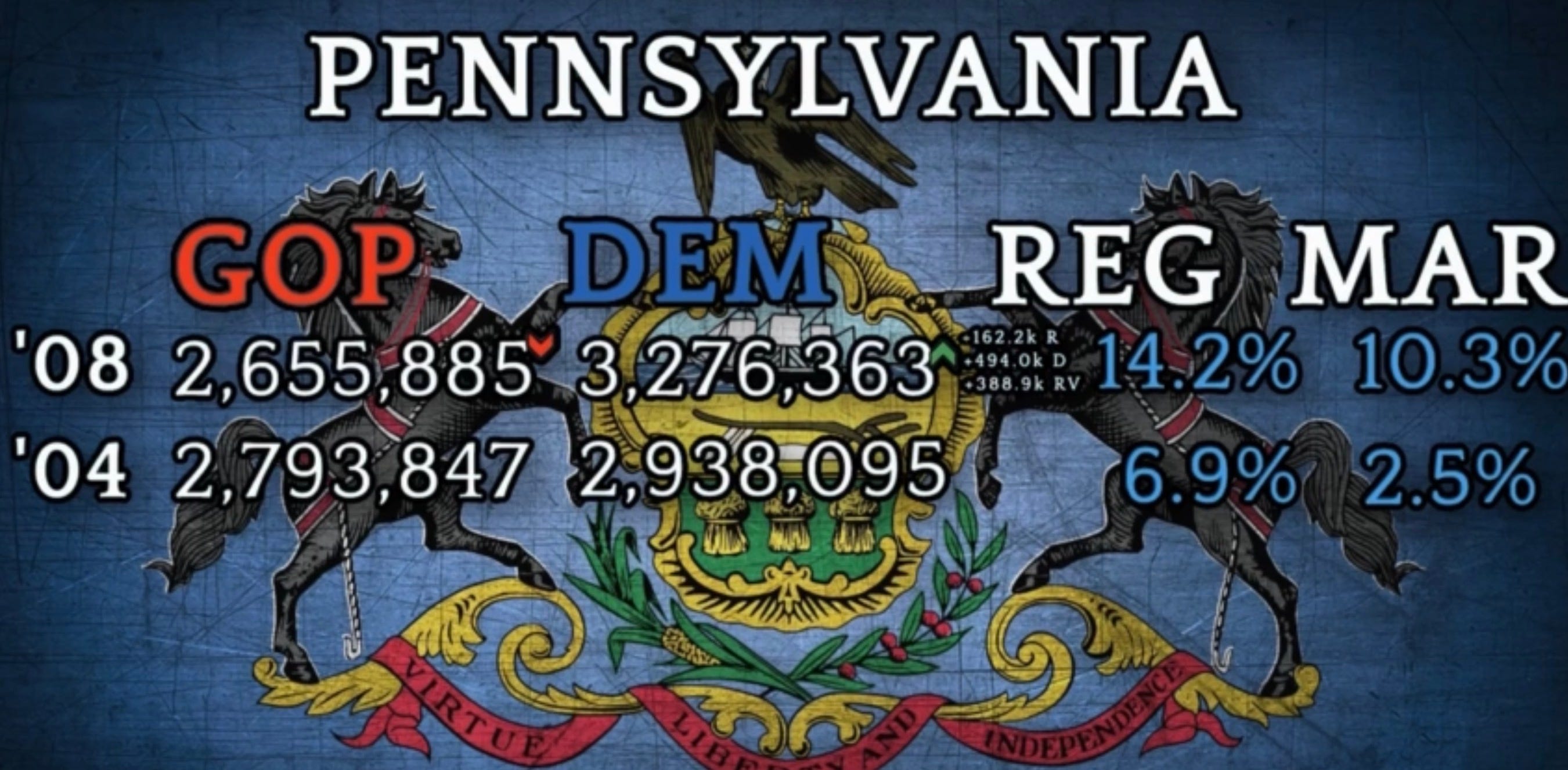
In every cycle since 2008, Democrats have eaten dirt on registrations, and have steadily lost ground (and should have lost the state in 2020, as described in detail in my book); however, in 2008, the Democrats were sitting a net of more than 331,000 registrations better off against the GOP than they had been in 2004, when John Kerry won by 2.5% over George W. Bush. This drove the voter registration advantage for Democrats from D+6.9% in 2004 to D+14.2% (14.2% more Democrats than Republicans), signaling a landslide in the works for Obama. He wound up beating McCain by 10.3% in what was the largest Democrat presidential margin of victory in the state since Lyndon Johnson’s 1964 national landslide.
Republicans had been losing ground practically everywhere in the run up to the 2006 and 2008 cycles, and it was evident in voter registration data. Financial collapse, never-ending wars, the growth of the surveillance state, and myriad other issues drove voters away from the GOP and toward Democrats. Obama flipped a number of states, including Indiana and North Carolina (which have both come back to the GOP), as well as long-standing Republican strongholds Virginia and Colorado, which have never returned to their red roots.
Obama’s coalition in 2008 included the following:
The infamous “suburban women” and better margins with men
The Democrat unions and white working-class
Unprecedented urban vote shares
A record share of the minority vote with a record turnout
That last point is the most important, as it is the focus of today’s piece. It is also what made the Obama 2008 coalition so fragile. Do you remember when I wrote about why the Democrats are at such a strategic disadvantage for the U.S. Senate this year?
End of June 2026 Senate Majority Race Update

Yesterday, I whittled down the battle for the U.S. House majority to 23 decisive races. It’s going to be close, no matter how you slice it:
It’s not that there isn’t a pathway. It’s just that the pathway requires them to win four of five key races and then win three of four races in states they now almost always lose just to get a 51-49 majority. Just this week, the media began to inch all four of those “reach states” - Alaska, Iowa, Ohio, and Texas - away from the Democrat contenders (as is their standard practice when looking to save face).
So things were with the fragile Obama coalition of 2008. By 2012, the cracks were evident, with 43 of 50 states moving back to the right (in keeping with voter registration shifts, by the way). The problem for Romney was that he was incapable of picking up the voters (over 3 million) that Obama couldn’t hold from four years earlier. Therefore, Romney only got Indiana and North Carolina back in the Republican fold.
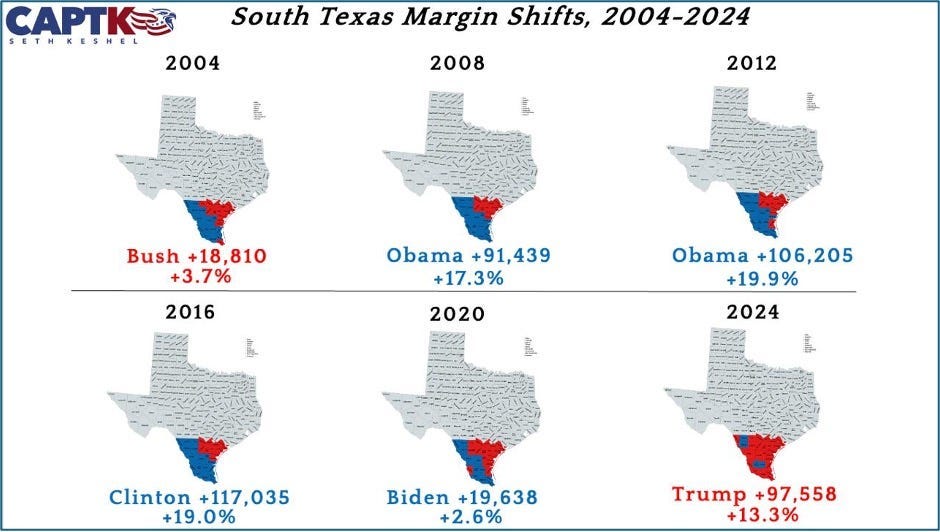
The bottom of the wet Democrat grocery bag ripped out in 2016 and, 2020 excepted, has only widened since. Here’s a reminder on the Latino shift in favor of Trump in South Texas in 2024:
The Dirty Little Democrat Secret
Even in polling, which is difficult to believe no matter if the outcomes favor your position (or candidate) or not, Republicans win most debates on policy. Borders, immigration enforcement, foreign policy (if not overly hawkish), taxes, you name it. The Democrats, depending on the location, sometimes poll higher on “women’s rights” or some other pet social issues, but generally lag behind the GOP everywhere else. They’ve lost the white working-class to the GOP as long as the direction of the party remains pro-Trump with regard to trade policy. That puts Democrats under major pressure to defend Pennsylvania, Michigan, Wisconsin, and even Minnesota. The extreme candidates being elected in major blue bubbles (including Denver this week) will now kill their gains with gullible white moderates who want to impress their friends with their tolerance, as I pointed out last week:
Are You Not Entertained?

Last night, Rachel and I attended a candidate meet-and-greet at a home in Saddlebrooke, Arizona. Saddlebrooke is a community made up of several precincts that have been regressing from Republicans for a decade to the point they are essentially 50/50 tossups, especially in a tough 2026 campaign cycle. It was important, and the meeting’s location inside a miniature canyon prevented me from tracking last night’s primary results until we were on our way back toward Tucson.
They’ve lost the white working-class. They’re limiting and soon to be squandering their gains, which are required given the loss of the working-class, with white suburbanites. The Republicans going light on the social issues and attacking crime is eroding margins in urban areas, and this brings us to the main point:
Democrats have to keep race (and racism) alive and well in order to survive. Here is why: