


Author’s Note: This overview aims to identify seats that are not competitive in 2026, so resources can be allocated appropriately and with maximum impact. I will pass through the map in the same way I did for the 2024 election cycle, starting in the east and ending in the west.
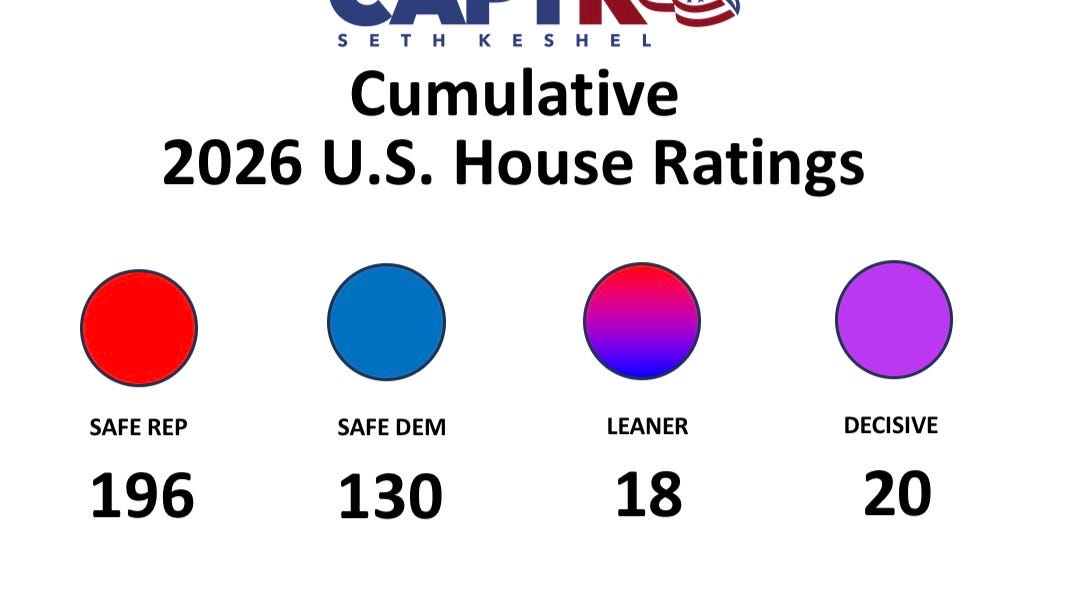
The assessment for the 2026 House race begins the same way assessing the 2024 Electoral College did - by eliminating safe red and blue races in order to spot the leaners and decisive races. My analysis of those races will follow the diagnosis of safe races, and the delay will be prudent because the primaries are much more important for the races that are still up in the air.
Previous:
Appalachia (KY, TN, WV)
Carolinas (NC, SC)
Deep South (AL, LA, MS)
Industrial Midwest (IN, MI, OH)
Mid-Atlantic (DE, MD, NJ)
New England (CT, ME, MA, NH, RI, VT)
Ozarks + Plains (AR, KS, MO, NE, ND, SK, OK)
Rockies (CO, ID, MT, WY)
Southwest (AZ, NV, NM, UT)
Upper Midwest (MN, WI)
INTRODUCTION
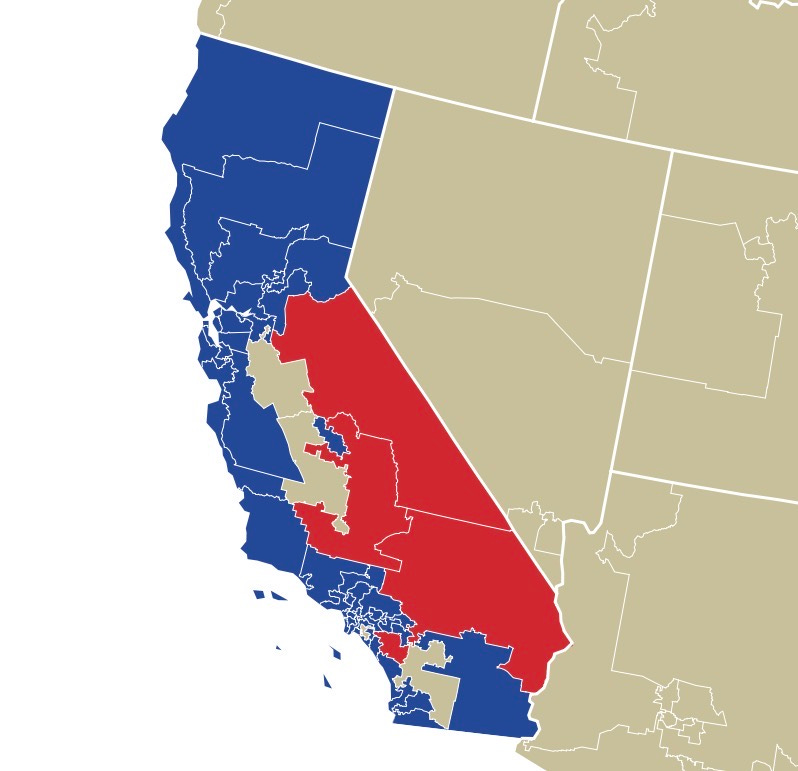
Unless you’ve been living under a rock, you probably recognize California as America’s mother ship of electile dysfunction and know that Governor Gavin Newsom successfully spearheaded a legislative takeover of the “independent commission” that had drawn up an already unbalanced 43-9 U.S. House map favoring Democrats.
California’s Pyrrhic Victory: Why Spencer Pratt Had to Go Down NOW

There are 435 U.S. House races up this year, as there are every two years, in addition to 71 Gubernatorial and Senate races. More than 500 opportunities to get a call wrong, if in fact I make individual predictions on every race instead of predicting X party will win Y range of seats. I haven’t decided how I want to make my predictions, but one thing is for certain - I won’t get them all right forever. But…yesterday another one of my predictions (sadly) came true when I wish it had been wrong:
The special election that green-lighted the new maps was intended to give Democrats an edge that is perhaps as high as 48-4. Should they fall at all short of the 48-4 goal they’ve set with their new gerrymander, they are gravely at risk of failing to obtain the bare minimum majority of 218 seats. California has been so blue for so long that I can’t help but think it may have reached its apogee and, despite a 2026 midterm environment likely to favor Democrats more than usual, could produce a fluke upset or two. I have two friends who will be GOP nominees within these newly gerrymandered districts, and both know exactly what they’re up against in what amounts to a prolonged game of ballot collection.
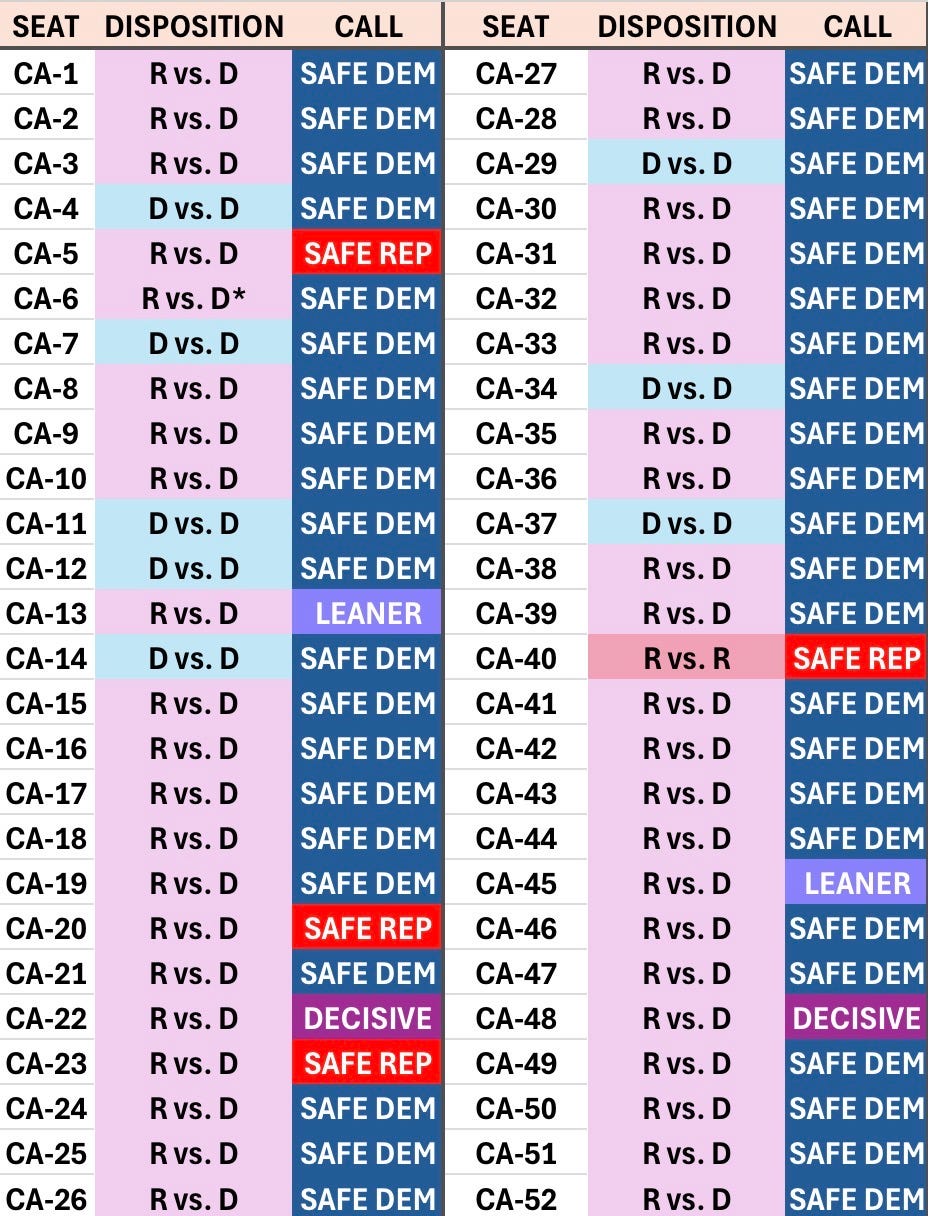
For now, most of the pundits see two seats in play (CA-22 and CA-48); however, every single district is redrawn and in many cases, candidates have jumped races. Analysis within this article for California breaks from the usual text-based breakdown in favor of a chart showing the seat, the disposition (in some cases, with one party locked out), and the rating for the race.
Note: In CA-6, Kevin Kiley is technically running as an Independent. He is a de facto Republican candidate who is currently a sitting member of Congress, forced to jump races when lines were redrawn.
Here are my evaluations of the state’s 2024 presidential election:

Analysis
CALIFORNIA
CALIFORNIA SUMMARY
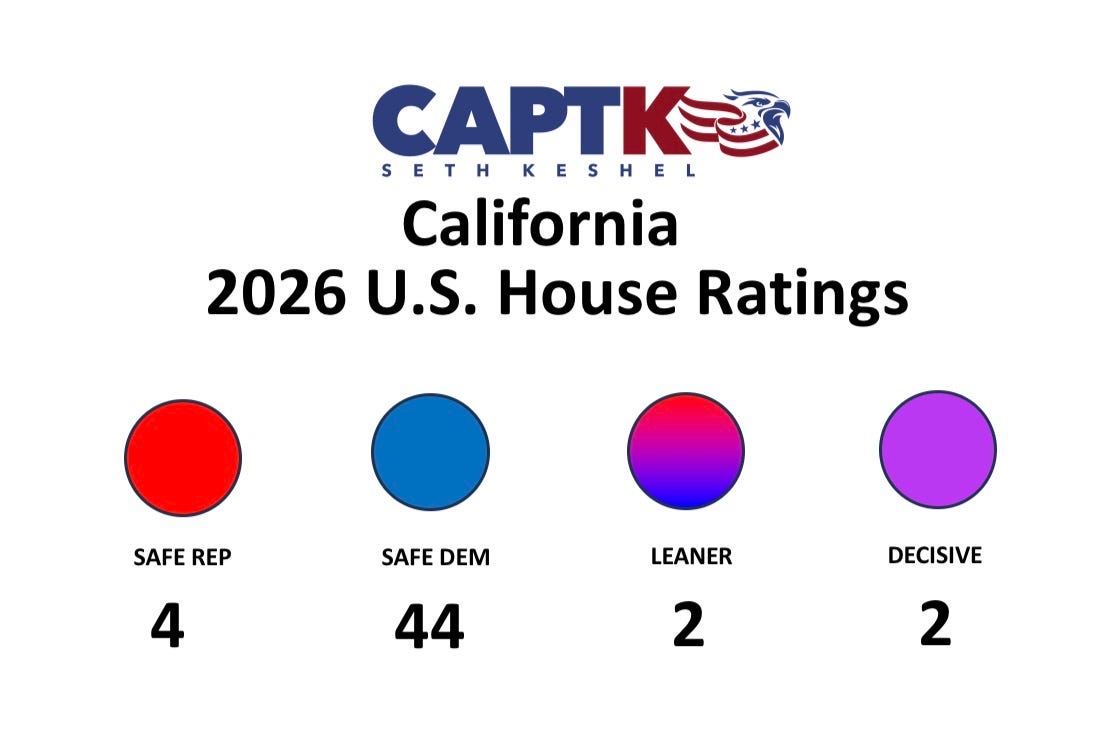
Democrat 44
Republican 4
Leaner 2 (CA-13, CA-45)
Decisive 2 (CA-22, CA-48)
Future analysis, with safe seats accounted for, will drill down on CA-13 and CA-45 (leaners) and the decisive seats of CA-22 and CA-48. Republicans would be wise to invest their resources in races that can be won rather than those not considered competitive, with well-established midterm dynamics hampering the president’s party accounted for.
Seth Keshel, MBA, a former Army Captain of Military Intelligence and Afghanistan veteran, is the author of The American War on Election Corruption. His analytical method of election forecasting and analytics is known worldwide, and he has been commended by President Donald J. Trump for his work in the field.
It is an entire state of illegitimacy.
As someone who lives in Newsom's California, this is a pretty good analysis. I think Valadao is likely to survive as he knows how to play the ballot collection game well after 2018. Desmond, Gallagher, and Kiley could also win their seats as they face weak opponents in the General election. If RNC vs Watson is decided favorably, then their chances improve.